


Key Takeaways:
- Back-to-school schedule changes can increase stress, disrupt sleep, and reduce time for therapy or support meetings, creating conditions that may raise relapse risk.
- Parents, college students, educators, and other adults may face different triggers, including financial pressure, academic demands, social environments, exhaustion, and reduced personal time.
- Protecting recovery appointments, maintaining healthy routines, planning for high-risk times, and responding early to warning signs can help prevent stress from escalating into substance use.
The start of a school year changes more than class schedules. Mornings begin earlier, calendars fill up, transportation becomes harder, expenses rise, and evenings may revolve around homework, practices, meetings, and preparing for the next day.
For someone living with addiction or working to maintain sobriety, that sudden shift can create more pressure than it appears to from the outside.
Parents may lose time for therapy or support meetings. College students can face academic demands, social pressure, and new access to alcohol or drugs. Educators and school employees may return to emotionally demanding work after a quieter summer. Even adults without children can feel the seasonal change as work, traffic, social events, and household responsibilities pick up again.
Stress can increase cravings, disrupt healthy routines, and bring old coping habits back into focus. During periods of added pressure, people may also feel more vulnerable to triggers connected with past substance use, including certain environments, relationships, or emotional patterns.
Back-to-school stress can be managed with preparation. Protecting sleep, maintaining regular support, planning for triggering situations, and recognizing when a higher level of care may be helpful can make it easier to stay grounded during a demanding season.
At Midwest Recovery Centers, we help adults and their loved ones address addiction, primary mental health concerns, and co-occurring conditions through a full continuum of care in the Kansas City area. Treatment can provide structure when the new school-year routine has made alcohol or drug use harder to control.
“Back-to-school stress can create more relapse risk than people expect because several parts of a recovery routine may change at once—sleep, appointments, family responsibilities, finances, and daily structure. We encourage clients to pay attention when school stress and substance use begin to overlap, especially if cravings increase or recovery commitments start getting pushed aside. Recognizing back-to-school relapse triggers early gives someone a better chance to adjust their support and protect the progress they have already made.”
– Taylor Brown, CRADC
Why Can the Back-to-School Season Raise Substance Use Risk?
Routine changes can place extra demands on time, energy, finances, and relationships. Those demands may become especially difficult when someone has relied on alcohol or drugs to manage pressure, shut off racing thoughts, stay awake, sleep, or escape difficult emotions.
The person does not have to be a student for the season to affect them.
A parent may suddenly be responsible for early drop-offs, late practices, school forms, meal preparation, and transportation. Someone co-parenting after a separation may face schedule conflicts or increased communication with a former partner. College students may move away from home, meet new peers, or return to environments associated with previous substance use.
Educators and other school employees may also move from a summer routine into long, highly structured days with limited time to decompress.
Common seasonal pressures include:
- Earlier mornings and less sleep
- New childcare or transportation responsibilities
- School supply and activity expenses
- Academic expectations
- Social pressure on a college campus
- Changes in work hours
- Crowded family calendars
- Less time for therapy or recovery meetings
- Conflict over homework, grades, or household roles
- Loneliness after a child leaves for college
- Increased access to alcohol at sporting or campus events
SAMHSA’s back-to-school resources encourage parents, caregivers, and educators to pay attention to both mental health and substance misuse as the school year begins. The agency also emphasizes early conversations and connection to care when additional support may be needed.
The practical concern is not that school itself causes addiction. It is that several stressors may arrive at once, reducing the time and emotional space available for healthy coping.
How Do School Stress and Substance Use Become Connected?
Alcohol or drug use can begin to feel like a quick way to change an uncomfortable internal state.
A parent may drink after the children go to bed because it seems to quiet the mental list of unfinished tasks. A college student may use stimulants to study longer, then take another substance to sleep. Someone with anxiety may rely more heavily on prescription sedatives as social or academic pressure increases.
The relief is usually temporary. The original stress remains, and substance use may add new problems involving sleep, health, relationships, finances, or performance.
Repeated use can strengthen a pattern:
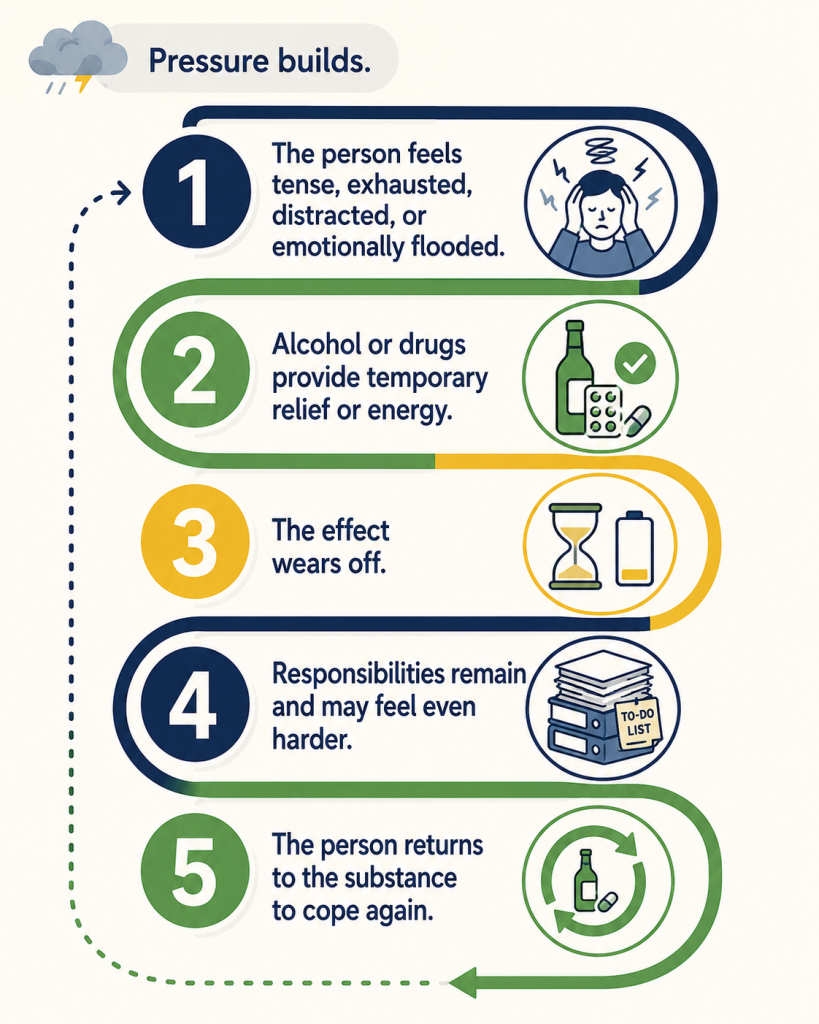
Alcohol can both activate the brain’s reward system and reduce activity connected with stress and emotional pain. With repeated heavy use, these effects can contribute to changes in reward, stress, and self-control systems that make alcohol increasingly difficult to resist.
This connection between school stress and substance use may become stronger when the person has few breaks in the day. What began as an evening habit can move earlier. Weekend use may extend into weekdays. Prescriptions may be taken more often or differently than directed.
The important question is not whether the person seems busy enough to justify using. It is whether alcohol or drugs have become the main tool for getting through the schedule.
What Back-to-School Relapse Triggers Can Disrupt Recovery?
A trigger can be internal, such as anxiety or exhaustion, or external, such as a place, person, event, or change in routine associated with past substance use.
Back-to-school season can introduce several triggers at once.
Less Time for Recovery Support
Therapy sessions, support groups, medical appointments, exercise, and quiet time may be pushed aside as the calendar becomes crowded.
One missed appointment may not cause a return to use. A larger pattern is more concerning. When recovery activities are repeatedly treated as optional, the person may lose the support that helped them manage cravings and stress.
Changes in Sleep
Early mornings, late-night studying, childcare demands, and worry can interfere with rest.
Poor sleep can make concentration, mood, and impulse control harder to manage. Someone may begin using stimulants to stay awake, alcohol to unwind, or sedatives to force sleep.
Financial Pressure
School clothes, supplies, tuition, transportation, meals, sports, and activity fees can strain a household budget.
Financial stress may increase conflict between partners or trigger shame in someone already worried about employment or debt. If alcohol or drugs have been used to escape those feelings, spending pressure may raise relapse risk.
Old Social Environments
A college student returning to campus may reconnect with friends associated with drinking or drug use. Parents may attend school events where alcohol is common. Fall sports and neighborhood gatherings can also bring someone back into settings connected with previous use.
NIAAA identifies stress and exposure to people or places associated with drinking as common relapse risks.
A Loss of Personal Time
Parents and caregivers may devote nearly every hour to work, children, household tasks, and transportation.
Self-care can begin to feel selfish or unrealistic. Over time, resentment and exhaustion may build quietly. Substance use may then appear to offer the only private break in the day.
High Expectations
The beginning of a school year can create pressure for a fresh start.
A parent may expect the household to become more organized immediately. A student may feel that every grade will determine their future. Someone in recovery may believe they should now be able to handle stress without asking for help.
Perfectionism can turn ordinary setbacks into evidence of failure. That emotional swing may become one of the less obvious back-to-school relapse triggers.
Why Can College Transitions Be Especially Difficult?
College can bring independence, academic demands, unfamiliar social expectations, and easy access to alcohol or drugs.
A student may be living away from family for the first time. Their daily structure may be less consistent than it was in high school. Classes might begin at different times each day, meals may be irregular, and social events can extend late into the night.
For an adult returning to college, the pressures may look different. Coursework may be added to employment, parenting, financial obligations, and household responsibilities. The person may feel that there is no room for falling behind.
Potential risks include:
- Using stimulants to study or complete assignments
- Drinking to reduce social anxiety
- Using marijuana or sedatives to sleep
- Binge drinking at campus events
- Hiding substance use from family
- Skipping meals or medication
- Withdrawing from supportive relationships
- Returning to use after reconnecting with former peers
- Avoiding help due to fear of academic consequences
SAMHSA provides substance-use prevention resources specifically for college students and young adults. The agency has also identified the beginning of the academic year as an important period for substance-use prevention and early intervention.
A college schedule should not be treated as proof that someone is functioning well. A person may continue attending class while their substance use, mental health, sleep, or physical safety deteriorates.
Missed classes are one warning sign, but they are not the only one. Increased secrecy, repeated blackouts, sudden mood changes, unexplained spending, and withdrawal from normal relationships may appear before academic performance drops.
old to appear normal. It is to address the substance use and restore a more stable structure.
What Can Help With Staying Stable During the School-Year Transition?
The start of a new school year can quickly change routines, responsibilities, and stress levels. A recovery plan works best when it reflects the actual schedule, especially during weeks filled with work, school activities, appointments, transportation, and family responsibilities.
| Area to Plan For | Helpful Strategies |
| Recovery commitments | Schedule therapy firstKeep support meetings consistentProtect medication appointmentsMaintain counselor check-ins |
| Morning and evening routines | Prepare clothes and bags aheadKeep a consistent bedtimePlan simple breakfastsSet medication remindersConfirm transportation plans |
| High-risk times of day | Identify when cravings usually increasePlan a specific activityKnow who to callHave an exit or support plan ready |
| Sleep, food, and medication | Protect sleep whenever possibleKeep meals simple and consistentAvoid skipping mealsTake medications as directed |
| Extra commitments | Limit unnecessary activitiesBe selective with social eventsAvoid overloading the calendarLeave room for rest and recovery |
| Relapse-prevention planning | Review current triggersWatch for early warning signsUpdate emergency contactsConfirm transportation optionsReview plans for cravings or return to use |
Protecting recovery commitments, reducing avoidable stress, and planning ahead for difficult moments can make the school-year transition more stable and easier to manage.
How Should Loved Ones Raise Concerns About School Stress and Substance Use?
Choose a calm time when the person is not intoxicated, withdrawing, rushing to work, or handling an immediate school problem.
Focus on what has been observed.
A direct conversation might address missed responsibilities, changes in mood, hidden alcohol, unsafe driving, medication misuse, or repeated attempts to cut back. Avoid trying to prove the person has a particular diagnosis during the first discussion.
Helpful principles include:
- Be specific rather than general.
- Keep the conversation focused.
- Avoid insults or threats that cannot be followed through.
- Ask whether the person is willing to speak with a treatment provider.
- Offer practical help with the admissions call.
- Protect children from unsafe transportation or supervision.
- Set clear boundaries around substance use in the home.
- Call emergency services when immediate danger is present.
A person does not need to agree with every concern before treatment can be discussed. They may feel defensive, ashamed, or frightened.
The purpose of the conversation is not to win an argument. It is to make the problem harder to ignore and create a path toward qualified care.
Midwest Recovery Centers Services
Midwest Recovery Centers offers personalized behavioral health care in the Kansas City area for people dealing with substance use, mental health challenges, or both. Our treatment options are designed to meet clients at different stages of care while providing consistent clinical support.
We keep our programs intentionally smaller to create a more connected treatment experience. Care is built around the individual and considers emotional, physical, and personal well-being, with an emphasis on respect, inclusion, service, and growth.
Detox and Residential Addiction Treatment
Detox and Residential care make up the first 30 days of our substance use track.
Medical Detox provides supervised stabilization as alcohol or drugs leave the body. Medication-assisted treatment is offered only during Detox when clinically appropriate.
Residential treatment adds a structured setting with services that may include:
- Cognitive behavioral therapy
- Acceptance and commitment therapy
- Dialectical behavior therapy
- Rational emotive behavior therapy
- Individual and group therapy
- Experiential group work
- Holistic activities
- Support-group integration
- Medical and psychiatric assessments
- Personalized treatment planning
- Goal setting and progress reviews
We treat substance use involving alcohol, heroin and other opioids, methamphetamine, cocaine, marijuana, prescription drugs, and multiple substances.
Phase 1 and Phase 2 Extended Care
After the first 30 days, clients may transition into Phase 1 for approximately 60 days.
Phase 2 may continue for up to nine months, depending on clinical need. Housing is included throughout both phases.
This structure works much like continuing inpatient support. Clients gradually take on more independence while remaining connected to stable housing, therapy, accountability, peer support, and clinical care.
Extended care can provide time to practice managing work, school, parenting, and household responsibilities before treatment support becomes less intensive.
Community IOP for Substance Use and Mental Health
We offer two Community Intensive Outpatient Programs:
- Community IOP for Substance Use Disorder
- Community IOP for Mental Health
Community IOP is designed for individuals who do not want, or are not able, to commit to the long-term housing component. It can serve as an initial treatment level or a step down from more intensive care.
Medical oversight is available in both Community IOP tracks and may include:
- Medication management
- Comprehensive psychiatric evaluations
- Transcranial Magnetic Stimulation
- Long-Acting Injectable medications
- PGx genetic testing
- Telemedicine
These programs allow clients to receive structured care while continuing to live in the community and manage appropriate work, education, or family responsibilities.
Residential and Outpatient Mental Health Care
Our Residential Mental Health Program provides 45 days of structured care for primary mental health disorders, not only conditions that occur alongside addiction.
The program may include therapy, psychiatric services, medication management, primary care support, TMS, nutrition, fitness, precision medicine, and other whole-person services.
Outpatient mental health services are also available. They can follow residential treatment, but they do not have to. Some clients begin directly with outpatient care when they can safely live at home while participating in treatment.
Clinical and Co-Occurring Disorder Services
School-year stress may worsen depression, anxiety, trauma symptoms, bipolar disorder, sleep problems, or another mental health condition. When those symptoms occur alongside addiction, treating only one concern may leave the other active.
Our coordinated model supports clients with both substance use and mental health diagnoses.
Clinical services include:
- Ongoing medical assessments
- Psychiatric evaluations
- Personalized treatment planning
- Medication oversight
- Measurable treatment goals
- Progress monitoring
PGx genetic testing is available across all levels of care. It can give clinicians additional information about how a person may metabolize certain medications, supporting medication decisions alongside health history, symptoms, prior responses, and clinical judgment.
Family Programming
Our Family Program provides education, counseling, connection, and practical tools for loved ones affected by addiction or mental illness.
Virtual Substance Use Disorder Family Programming takes place on Thursdays from 6:30 to 8:00 p.m. Central Time through a four-part monthly rotation:
- First Thursday: Addiction education, causes, family dynamics, and what to expect at MRC
- Second Thursday: Enabling, healthy support, grief, and codependency
- Third Thursday: Healthy boundaries before, during, and after treatment
- Fourth Thursday: Detaching with love, self-care, and changing family roles
The Virtual Family Program for Mental Health meets on the third Thursday of each month at 8:00 p.m. Central Time.
Our in-person family education session, “Supporting Their Next Steps: An Aftercare Info Session for Families,” is held on the first Wednesday of each month at 7:00 p.m. at our Main Outpatient Campus, 13340 Holmes Road, Kansas City, Missouri 64145.
Aftercare
Our Aftercare program helps clients maintain stability as they transition from structured treatment into daily life, particularly during the first year.
Personalized care may include:
- Regular counselor check-ins
- Individual or group therapy
- Relapse-prevention planning
- Goal reviews
- Community support
- Adjustments to the continuing-care plan
Aftercare can help clients prepare for seasonal routine changes rather than waiting until missed appointments, growing cravings, or a return to use creates another crisis.
Build a Stronger Fall Before the Pressure Builds
A new school year can expose how little room someone has left between ordinary stress and substance use.
The warning signs may begin quietly: skipped meetings, hidden drinking, missed medication, less sleep, growing irritability, or the belief that treatment can wait until the household schedule settles. Waiting usually allows the pressure to become more established.
Midwest Recovery Centers can help assess what is happening now and identify a level of care that fits. That may include Medical Detox and Residential treatment, extended care with housing, Community IOP, primary mental health services, family programming, or Aftercare.
Contact our admissions team today if school stress and substance use are beginning to overlap or if back-to-school relapse triggers have led to cravings, medication misuse, heavier drinking, or a return to drugs.
The calendar may be full, but care still deserves a place on it.
FAQs
1. Can back-to-school stress increase the risk of relapse?
Yes. A busier schedule can disrupt sleep, therapy, support meetings, meals, and other recovery routines. Stress may also increase cravings or make old coping habits feel more appealing.
2. What are common back-to-school relapse triggers?
Common triggers include lack of sleep, financial pressure, academic expectations, crowded schedules, reduced recovery support, family conflict, social pressure, and returning to environments connected with past substance use.
3. How can parents protect their recovery during the school year?
Parents can schedule recovery commitments first, maintain consistent morning and evening routines, protect sleep and meals, plan for high-risk times of day, and reduce unnecessary commitments.
4. Why can the start of college increase substance use risk?
College may bring greater independence, academic pressure, unfamiliar social situations, inconsistent routines, and easier access to alcohol or drugs. Students may also use substances to study, socialize, sleep, or manage anxiety.
5. What should someone do if back-to-school stress leads to a return to substance use?
Address immediate medical or safety concerns first, then contact a treatment provider promptly. A return to use may indicate that the current recovery plan or level of care needs to be adjusted.