

Key Takeaways:
- Chronic health conditions can affect detox safety, making medical screening and ongoing monitoring especially important during withdrawal.
- Diabetes, heart disease, kidney problems, liver disease, and seizure disorders may require additional medical planning or hospital-level care.
- Sharing medications, medical history, recent symptoms, and substance use helps clinicians determine the safest level of detox care.
Stopping alcohol or drugs can place significant stress on the body. When diabetes, heart disease, kidney problems, liver disease, chronic pain, or another ongoing medical condition is also present, that stress may be harder to predict and manage.
That does not mean detox is out of reach. It means the starting point needs to be chosen carefully.
Withdrawal symptoms can affect blood pressure, heart rate, hydration, appetite, sleep, blood sugar, and mental clarity. At the same time, symptoms from a chronic illness may resemble withdrawal or make it more severe. Trying to sort out those changes at home can leave a person without help when their condition shifts quickly.
A medically supervised detox provides assessment, monitoring, and a treatment plan based on more than the substance being used. The clinical team also considers current medications, past withdrawal experiences, medical diagnoses, recent hospital visits, and the person’s overall stability. Clinical guidelines recommend screening for medical conditions that could affect the course or treatment of alcohol withdrawal, including common concerns such as high blood pressure, heart disease, liver disease, and digestive problems.
At Midwest Recovery Centers, we begin with a confidential admissions screening. Our team reviews the immediate situation and determines whether our Detox and Residential program can safely meet the person’s needs or whether hospital-level medical care should come first.
“When someone has diabetes, heart disease, or another ongoing medical condition, detox needs to account for much more than withdrawal symptoms alone. Medical detox with chronic health conditions requires careful screening of medications, recent symptoms, substance use, and overall medical stability because withdrawal can affect blood sugar, heart rate, blood pressure, hydration, and other important functions. A medically supervised detox gives the clinical team a better opportunity to recognize changes early and determine whether detox or hospital-level care is the safest place to begin.”
– Taylor Brown, CRADC
Can Chronic Illness Change Where Detox Should Begin?
A chronic medical diagnosis can affect the safest level of withdrawal care, but the diagnosis alone does not make the decision.
Two people with diabetes may have very different needs. One may have stable blood sugar, reliable medication use, and no recent complications. Another may have frequent low blood sugar episodes, missed insulin doses, poor food intake, or a recent hospital stay. The same is true for heart disease, liver disease, kidney disease, seizure disorders, and other conditions.
The admissions and clinical teams may consider:
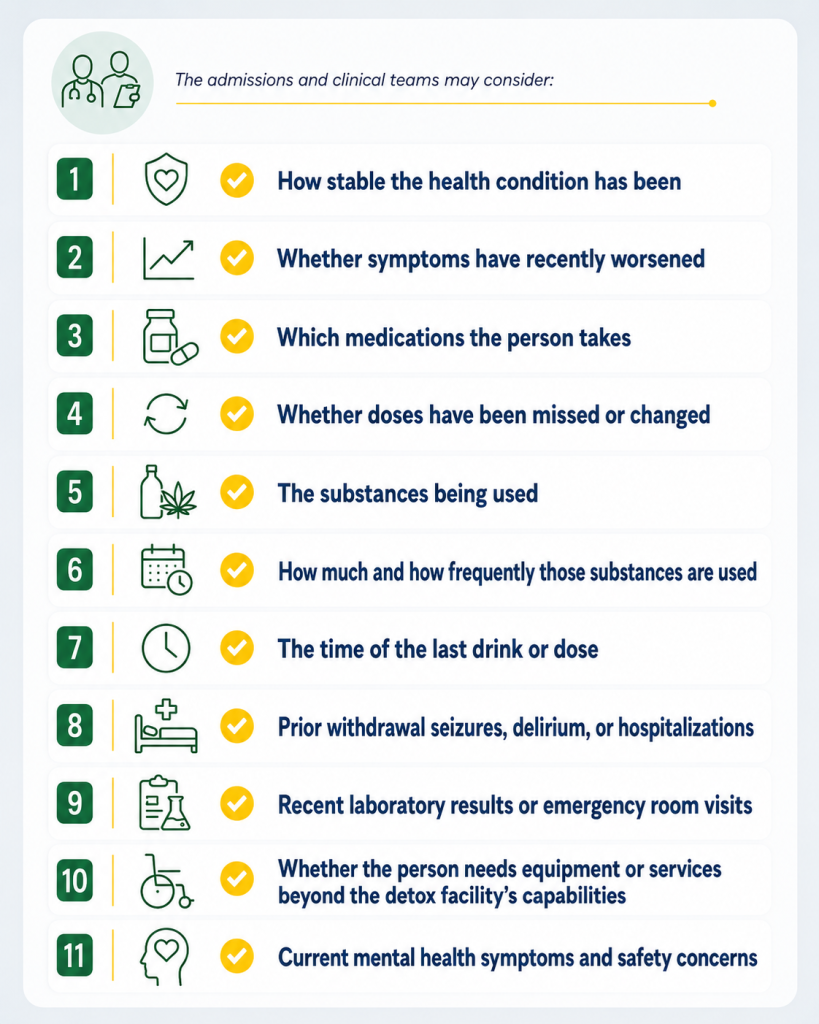
An appropriate placement may be medical detox, a hospital, another medically intensive setting, residential care, or an outpatient program. The purpose of the screening is not to exclude someone because they have health concerns. It is to prevent a placement that cannot safely provide the care they need.
ASAM guidance calls for a physical examination, review of concurrent medical conditions, and laboratory testing when available to evaluate electrolytes, liver function, kidney function, immune function, and other factors that can influence withdrawal treatment.
Why Is Medically Supervised Detox Safer When Health Is Already Fragile?
Withdrawal does not happen separately from the rest of the body.
A rapid heart rate may be caused by withdrawal, low blood sugar, dehydration, an irregular heart rhythm, anxiety, infection, or several problems occurring together. Shaking could be linked to alcohol withdrawal, hypoglycemia, medication effects, or another condition. Confusion may signal severe withdrawal, dangerously high or low blood sugar, a medication reaction, or a neurological emergency.
A medically supervised detox gives trained staff a chance to look at the full clinical picture instead of assuming every new symptom is caused by withdrawal.
Medical supervision may include:
- Reviewing medical and substance-use history
- Checking vital signs
- Assessing withdrawal symptoms
- Reviewing prescription and over-the-counter medications
- Watching for changes that may require a higher level of care
- Coordinating medical or psychiatric evaluation
- Supporting hydration, nutrition, and rest
- Developing a personalized plan for continued treatment
Medical detox is not a guarantee that every chronic illness can be managed in a residential setting. Some conditions require hospital resources, specialty care, or closer medical monitoring than a behavioral health facility can provide.
That distinction protects the client. A responsible program will review its capabilities and recommend hospital care first when the person is medically unstable.
What Changes When Diabetes Is Part of the Detox Plan?
Diabetes can make withdrawal more complicated because substance use, reduced food intake, vomiting, dehydration, stress, and changes in routine may all affect blood sugar.
Alcohol adds another concern. The liver helps keep blood glucose stable, but it also processes alcohol. The American Diabetes Association notes that the liver may prioritize metabolizing alcohol instead of maintaining blood glucose, which can contribute to hypoglycemia, particularly when a person drinks without eating.
During detox, a person with diabetes may also be eating differently than usual. Nausea, stomach discomfort, fatigue, or poor appetite can make it difficult to follow their normal meal and medication schedule. Meanwhile, abruptly changing insulin or other diabetes medications without medical direction can create additional danger.
The admissions team needs accurate information about:
- Whether the person has Type 1, Type 2, or another form of diabetes
- Insulin and other diabetes medications
- Typical blood sugar patterns
- Recent episodes of severe low or high blood sugar
- Continuous glucose monitors, insulin pumps, or other devices
- Recent emergency visits or hospitalizations
- Kidney, vision, nerve, or circulation complications
- How consistently the person has been eating
- Whether medication doses have recently been missed
- Alcohol or drug use that occurred alongside diabetes medications
Clients should not hide missed insulin doses or abnormal blood sugar readings because they fear admission will be denied. Those details help the team determine whether direct detox admission is appropriate or whether hospital stabilization is needed.
Severe hypoglycemia is a medical emergency. Confusion, seizures, unconsciousness, or an inability to treat low blood sugar independently requires immediate help. The ADA advises calling 911 when someone is unconscious and glucagon is unavailable or cannot be administered.
Detox should also not be used to replace regular diabetes care. The person may still need coordination with their primary care clinician, endocrinologist, or another medical provider during and after addiction treatment.
How Does Heart Disease Affect Withdrawal Care?
Withdrawal can affect the same systems already strained by cardiovascular disease.
Alcohol withdrawal may increase heart rate, blood pressure, sweating, tremors, anxiety, and nervous-system activity. ASAM specifically notes that conditions affected by increased autonomic activity, including cardiac illness, should be identified early so clinicians can respond appropriately.
The clinical team needs to know about:
- Coronary artery disease
- Prior heart attacks
- Heart failure
- Irregular heart rhythms
- Cardiomyopathy
- High blood pressure
- Stroke history
- Implanted cardiac devices
- Blood thinners
- Beta-blockers and blood pressure medications
- Recent chest pain, fainting, or shortness of breath
Medication details matter because some heart medications may change how withdrawal symptoms appear. For instance, a medication that slows the heart rate could make one visible sign of withdrawal less obvious. That does not mean the medication should be stopped. It means the treatment team needs to know it is being taken.
Alcohol use itself may also affect cardiovascular health. The American Heart Association reports that heavy and binge drinking are associated with high blood pressure, coronary artery disease, stroke, irregular heart rhythms, cardiomyopathy, and heart failure.
Someone with heart disease should not assume they can safely wait out withdrawal at home because previous attempts were manageable. Current substance use, hydration, age, medication changes, and overall health can make one episode different from another.
Chest pressure or pain, sudden shortness of breath, fainting, pain that spreads to the arm or jaw, or other possible heart attack symptoms require emergency care..
What About Liver Disease, Kidney Disease, Seizure Disorders, and Chronic Pain?
Other health conditions can influence medication choices, withdrawal risks, and the level of monitoring required.
Liver Disease
The liver processes many medications and is frequently affected by prolonged alcohol use. If liver function is impaired, the clinical team may need to consider how medications are metabolized and whether additional medical evaluation is required.
ASAM recommends evaluating liver function during alcohol withdrawal assessment when testing is available. It also notes that impaired liver function may influence medication selection and dosage.
A person should report:
- Cirrhosis
- Hepatitis
- Fatty liver disease
- Yellowing of the skin or eyes
- Abdominal swelling
- Recent gastrointestinal bleeding
- Confusion linked to liver problems
- Abnormal laboratory results
- Previous hospitalization for liver complications
Severe symptoms may require hospital care before behavioral health treatment.
Kidney Disease
Kidney function affects fluid balance and the way the body clears certain medications. Vomiting, diarrhea, sweating, and poor fluid intake during withdrawal may add further strain.
The team should know about chronic kidney disease, dialysis, fluid restrictions, recent kidney injuries, or abnormal kidney-function tests. Diabetes, high blood pressure, and heart failure are also major risk factors for chronic kidney disease, so these conditions may need to be considered together rather than separately.
Seizure Disorders
A history of epilepsy or other seizures must be disclosed before detox. Alcohol and sedative withdrawal can also cause seizures, which makes it important to distinguish an existing seizure condition from a withdrawal complication.
The team needs the names and doses of seizure medications, details about the most recent seizure, and information about missed doses. No one should abruptly stop an antiseizure medication unless instructed by an appropriate medical provider.
Chronic Pain
Chronic pain may be treated with opioids, muscle relaxants, sedatives, nerve-pain medications, or other prescriptions that can affect withdrawal planning.
The admissions team needs a complete medication list, including medications taken differently from the prescribed instructions. A person should not leave out a prescription because it came from a doctor. Prescribed medications can still interact with alcohol, illicit drugs, or medications used during withdrawal care.
Detox also does not remove the need for a long-term pain-management plan. Addiction treatment and pain care may need to be coordinated so that pain is addressed without relying on unsafe patterns.
What Should Be Shared During the Admissions Screening?
A good admissions screening depends on clear, accurate information. The goal is not to judge how the situation developed, but to determine what can be managed safely and what level of care may be appropriate.
You do not need to have every document ready before making the first call. Gather what is reasonably available, and the admissions team can explain what additional information may be needed.
| Information to Gather | Helpful Details | Why It Matters |
| Medical History | Current diagnosesRecent hospital careCardiac events or proceduresDialysis or treatment schedules | Helps identify medical risksClarifies ongoing care needsSupports safe placement decisions |
| Medications and Allergies | Prescription medicationsCurrent dosesOTC medications and supplementsMedication allergies | Prevents medication conflictsHelps plan continued treatmentIdentifies safety concerns |
| Medical Records and Providers | Provider names and contact detailsDischarge instructionsRecent lab resultsBlood sugar records, when relevant | Provides current clinical informationHelps coordinate careMay reduce screening delays |
| Substance Use History | Substances usedApproximate amountsLast drink or doseRecent patterns of use | Helps estimate withdrawal riskGuides detox planningSupports level-of-care decisions |
| Withdrawal and Detox History | Previous detox experiencesPast seizuresDelirium historySevere withdrawal symptoms | Identifies higher withdrawal riskMay affect monitoring needsHelps determine whether detox is needed |
| Current Symptoms | Physical symptomsMental health symptomsChanges in behaviorImmediate safety concerns | Shows what is happening nowHelps identify urgent needsSupports appropriate placement |
| Insurance Information | Insurance providerMember informationRelevant policy details | Allows benefits verificationHelps clarify coverageSupports admission planning |
| Ongoing Medical Needs | Medical appointmentsHealth devicesDietary needsMedication storage needs | Confirms what the program can supportHelps plan daily careClarifies when hospital transfer may be needed |
Complete information helps the admissions team make a safer and more accurate recommendation, but missing paperwork should not prevent you from making the initial call.
At Midwest Recovery Centers, we can begin screening with the information you have available and explain what else may be needed. It is also helpful to ask how ongoing medical needs, appointments, medications, and health devices would be managed during treatment.
When Should Emergency Care Come Before Detox?
A detox center is not a substitute for an emergency department.
Someone who is medically unstable may need hospital treatment before they can be evaluated for residential detox. Calling a treatment center should never delay emergency help during a life-threatening situation.
Call 911 when the person:
- Is unconscious or cannot be awakened
- Has stopped breathing or is struggling to breathe
- Experiences a seizure
- Has severe or sudden chest pain
- Shows signs of a possible heart attack or stroke
- Has dangerously low blood sugar and cannot safely take treatment
- Is severely confused or disoriented
- Has persistent vomiting with signs of serious dehydration
- Has fallen or sustained a head injury
- Is hallucinating or extremely agitated
- May have taken an unknown or contaminated substance
- Has thoughts of suicide or may harm someone else
Withdrawal after prolonged heavy alcohol use can become life-threatening. Possible complications include rapid heart rate, seizures, hallucinations, and other serious symptoms, which is why NIAAA advises seeking medical help when planning to stop after long-term heavy drinking.
A hospital may stabilize the immediate medical problem and then coordinate the next level of addiction treatment. Receiving emergency care first does not close the door to detox. It helps make the eventual transfer safer.
What Happens During Medical Detox With Health Conditions?
Medical detox with health conditions starts with a broader assessment than withdrawal symptoms alone.
Initial Medical and Substance-Use Review
The team reviews the substances used, withdrawal history, current health diagnoses, medications, mental health symptoms, and recent medical events.
A personalized plan is then created based on current risk. Treatment may need to change as symptoms develop.
Ongoing Monitoring
Vital signs and withdrawal symptoms can reveal changes that need attention. For someone with a chronic condition, the team may also need to watch for signs that the underlying illness is becoming less stable.
Monitoring does not mean every health problem can be treated onsite. When a client’s needs exceed the facility’s capabilities, hospital evaluation or specialty care may be necessary.
Medication Review
Clients should not independently stop insulin, blood pressure medicine, heart medication, seizure medicine, psychiatric prescriptions, or other ongoing treatments before admission.
The clinical team needs to review the full medication list. This helps reduce the risk of missed treatment, duplicate medication, interactions, or withdrawal from a prescription medication.
Nutrition, Hydration, and Rest
Substance use and withdrawal can interfere with eating, drinking fluids, and sleeping. Those disruptions may have greater effects on someone managing diabetes, kidney disease, heart disease, or another chronic condition.
A structured setting helps restore a more consistent routine while the person receives clinical support.
Planning Beyond Withdrawal
Detox is the first stage of the substance-use treatment track at Midwest Recovery Centers, not the final stage. NIAAA also describes detoxification as the management of withdrawal symptoms rather than a complete treatment for alcohol use disorder.
Once the person is medically stable, care can shift toward therapy, coping skills, co-occurring mental health needs, family involvement, and long-term relapse prevention.
Midwest Recovery Centers Services
Midwest Recovery Centers was founded in 2016 to address the lack of comprehensive behavioral health services in the Kansas City area. We now operate two focused facilities, one for addiction treatment and another for primary mental health care, and provide the region’s only private continuum extending from detox through long-term support.
We keep our settings small and care deeply personal. Our approach considers the whole person across mind, body, and spirit while emphasizing inclusivity, equity, service, and teachability.
Detox and Residential Treatment
Our substance use track begins with Detox and Residential care during the first 30 days.
Detox provides medical supervision as alcohol or drugs leave the body. Medication-assisted treatment is offered during Detox when clinically appropriate and is limited to that portion of our substance use track.
After stabilization, residential treatment includes structured clinical care, individual and group work, holistic activities, and experiential therapy. Treatment approaches may include:
- Cognitive behavioral therapy
- Acceptance and commitment therapy
- Dialectical behavior therapy
- Rational emotive behavior therapy
- Experiential group work
- Holistic activities
- Support-group integration
Our substance-use services address alcohol, heroin and other opioids, methamphetamine, cocaine, marijuana, prescription drugs, and polysubstance use.
Phase 1 and Phase 2 Extended Care
After the first 30 days, clients may enter Phase 1 for approximately 60 days.
Phase 2 can continue for up to nine months, depending on clinical need. Housing is included in both Phase 1 and Phase 2. These extended-care programs provide continuing inpatient-style structure while allowing clients to build independence gradually.
Midwest Recovery Centers’ current treatment continuum places Detox and Residential care in the first 30 days, Phase 1 at roughly 60 days, and Phase 2 at up to nine months.
Community IOP for Addiction and Mental Health
We provide two Community Intensive Outpatient Programs:
- Community IOP for Substance Use Disorder
- Community IOP for Mental Health
Community IOP is intended for clients who do not want, or cannot commit to, the long-term housing component. Outpatient mental health treatment can also begin as a primary service and does not have to follow residential care.
Medical oversight is available across both Community IOP tracks and may include:
- Medication management
- Psychiatric evaluations
- Transcranial Magnetic Stimulation
- Long-Acting Injectable medications
- PGx genetic testing
- Telemedicine
Our current program information confirms that Community IOP serves clients who cannot commit to long-term housing and that both addiction and mental health clients can receive coordinated medical and psychiatric services.
Clinical and Co-Occurring Care
Our clinical services include ongoing medical and psychiatric assessments, personalized treatment planning, progress goals, and coordinated support for clients who have both a substance use disorder and a mental health diagnosis.
PGx genetic testing is available across all levels of care. Results may help clinicians evaluate how genetic factors could affect the way certain medications are processed, alongside symptoms, medical history, and clinical judgment.
Residential and Outpatient Mental Health Treatment
Our Residential Mental Health Program is a 45-day program designed for primary mental health disorders, not only conditions occurring alongside addiction.
The program combines therapy, psychiatric care, medication management, whole-person support, TMS, fitness, nutrition, and individualized planning.
Outpatient mental health services are also available. They may follow residential care or serve as the starting point when a person can safely live at home while attending treatment.
Family Programming
Our family programs provide education, counseling, encouragement, and practical tools for loved ones.
Current programming includes:
- Substance Use Disorder Virtual Family Programming: Thursdays from 6:30 to 8:00 p.m. Central Time through a four-part monthly rotation
- Virtual Family Program for Mental Health: The third Thursday of each month at 8:00 p.m. Central Time
- In-Person Family Education: The first Wednesday of each month at 7:00 p.m. at 13340 Holmes Road, Kansas City, Missouri 64145
The substance use rotation covers addiction education, enabling and healthy support, boundaries, codependency, family roles, self-care, and life after treatment.
Aftercare
Our Aftercare program supports continued sobriety and stability, particularly during the first year following treatment.
Personalized support may include counselor check-ins, individual or group therapy, relapse-prevention planning, goal reviews, and connection to community resources. Family programming and aftercare help carry the work of treatment into everyday routines and relationships.
How Can Loved Ones Make Admission Easier?
A loved one can help by making the process more organized without trying to make medical decisions for the person.
Useful steps include:
- Writing down all medications and doses
- Locating recent medical records
- Sharing accurate information about alcohol and drug use
- Reporting recent falls, seizures, chest pain, or blood sugar emergencies
- Contacting the admissions team before stopping alcohol or drugs at home
- Following instructions about transportation and belongings
- Keeping communication calm and direct
- Calling 911 when emergency symptoms are present
Avoid changing the person’s medication schedule to prepare for detox. Do not ration insulin, withhold heart medications, or give extra sedatives or alcohol in an attempt to manage withdrawal unless a qualified medical professional has given specific instructions.
The most helpful role is to connect the person with appropriate care and provide the information clinicians need to make a safe decision.
Start Your Recovery Today
Diabetes, heart disease, or another chronic health condition does not automatically prevent someone from receiving addiction treatment. It does make a careful clinical screening essential.
Trying to detox at home can be especially risky when withdrawal symptoms overlap with blood sugar changes, cardiovascular symptoms, medication effects, or complications from liver and kidney disease. Professional assessment can help determine whether treatment should begin in medical detox, at a hospital, or at another level of care.
Our admissions team can review your current health concerns, substance-use history, medications, withdrawal risks, and recent medical care. We will explain whether our medically supervised detox may be an appropriate starting point and what information is needed for admission.
Reach out to our team at Midwest Recovery Centers today for a confidential conversation about safe detox and continued care.
FAQs
1. Can someone with diabetes safely go through detox?
Yes, but diabetes can make detox more complex because withdrawal, changes in appetite, dehydration, stress, and substance use can affect blood sugar. Medical screening helps determine the safest setting for care.
2. How does heart disease affect detox?
Withdrawal can increase heart rate, blood pressure, and stress on the cardiovascular system. People with heart disease may require closer monitoring and careful review of their medications and current symptoms.
3. Should medications be stopped before entering detox?
No. Insulin, heart medications, blood pressure medications, seizure medications, and other prescriptions should not be stopped or changed without guidance from a qualified medical professional.
4. When is hospital care needed before detox?
Hospital care may be necessary for severe chest pain, breathing difficulty, seizures, unconsciousness, dangerously low blood sugar, severe confusion, serious dehydration, or other signs of medical instability.
5. What medical information should be shared before detox?
The admissions team should receive information about medical diagnoses, medications and doses, allergies, recent hospital visits, laboratory results when available, withdrawal history, substance use, and current symptoms.