


Key Takeaways:
- Substance-induced psychosis may involve hallucinations, paranoia, disorganized speech, extreme fear, confusion, agitation, and beliefs disconnected from reality.
- Methamphetamine, cocaine, alcohol, marijuana, prescription stimulants, hallucinogens, medications, and polysubstance use can contribute to psychotic symptoms.
- Immediate evaluation is important when symptoms involve self-harm, aggression, severe confusion, prolonged sleeplessness, or an inability to meet basic needs.
A sudden shift in behavior can feel deeply unsettling. One day, someone seems tired, anxious, or withdrawn. Then the situation changes fast. They start saying people are watching them. They hear things no one else hears. They become convinced that normal events carry hidden meanings. In some cases, they stop sleeping, stop eating regularly, or become so agitated that the whole room feels tense.
This is the point where a substance use problem may be doing more than affecting mood or decision-making. Certain drugs, alcohol, and even withdrawal states can trigger psychosis, paranoia, and hallucinations. Psychosis can involve false beliefs, disorganized thinking, and hearing or seeing things that are not there. Paranoia is often part of that picture, especially when a person feels watched, followed, judged, or threatened without evidence. Hallucinations may be auditory, visual, or even physical sensations that are not actually happening.
That can be frightening for the person going through it, and it can be just as frightening for a spouse, parent, sibling, or friend trying to decide whether the behavior is intoxication, a mental health crisis, or something more dangerous. Waiting it out can be risky, as can assuming it will disappear on its own.
Fast action can protect safety and make treatment more effective. At Midwest Recovery Centers in Kansas City, MO, clients can receive care across multiple levels of support, including medical detox, residential treatment, extended care with housing, Community IOP, residential mental health treatment, outpatient mental health services, family programming, aftercare, and integrated care for co-occurring disorders in the Kansas City area.
“Families often struggle to know whether they’re seeing severe anxiety, a mental health crisis, or something directly related to substance use. When someone begins experiencing paranoia, hallucinations, extreme confusion, or beliefs that are disconnected from reality, it can be a sign of substance-induced psychosis and should be taken seriously. Early recognition and immediate professional evaluation can be lifesaving, as these symptoms can place both the individual and those around them at significant risk.”
– Taylor Brown, CRADC
What Substance-Induced Psychosis Can Look Like
Psychosis related to substance use does not always begin with a dramatic break from reality. Sometimes it starts with smaller changes that build over several hours or several days. A person may seem unusually suspicious, highly reactive, or unable to follow a normal conversation. Their thoughts can become scattered. They may appear terrified by something no one else can see or hear.
Paranoia is often one of the clearest early warning signs. It can sound like:
- “They’re talking about me”
- “Someone is outside”
- “My phone is being tracked”
- “There are cameras in here”
- “That food is poisoned”
Those beliefs can feel completely real to the person, even when there is no evidence behind them. NIMH and MedlinePlus both note that psychosis commonly includes delusions, hallucinations, and disorganized or incoherent speech.
Hallucinations can also show up in different ways. Some people hear voices. Some see shadows, figures, or movement that others do not see. Others feel sensations on or under the skin. With stimulant use, especially methamphetamine, paranoia, anxiety, rapid heart rate, and psychotic symptoms can occur during use and can become severe.
What makes this especially hard for loved ones is that the person may not realize anything is wrong. They may seem convinced, defensive, or frightened rather than obviously confused. That is one reason substance-induced psychosis should never be brushed off as someone “just acting weird.”
Signs That Suggest More Than Ordinary Intoxication
A person who is intoxicated may be impaired, emotional, or hard to reason with. Psychosis goes further, and it affects reality testing. The person is no longer just under the influence. They may be reacting to things that are not actually present or building entire explanations around false beliefs.
Watch closely for patterns like these:
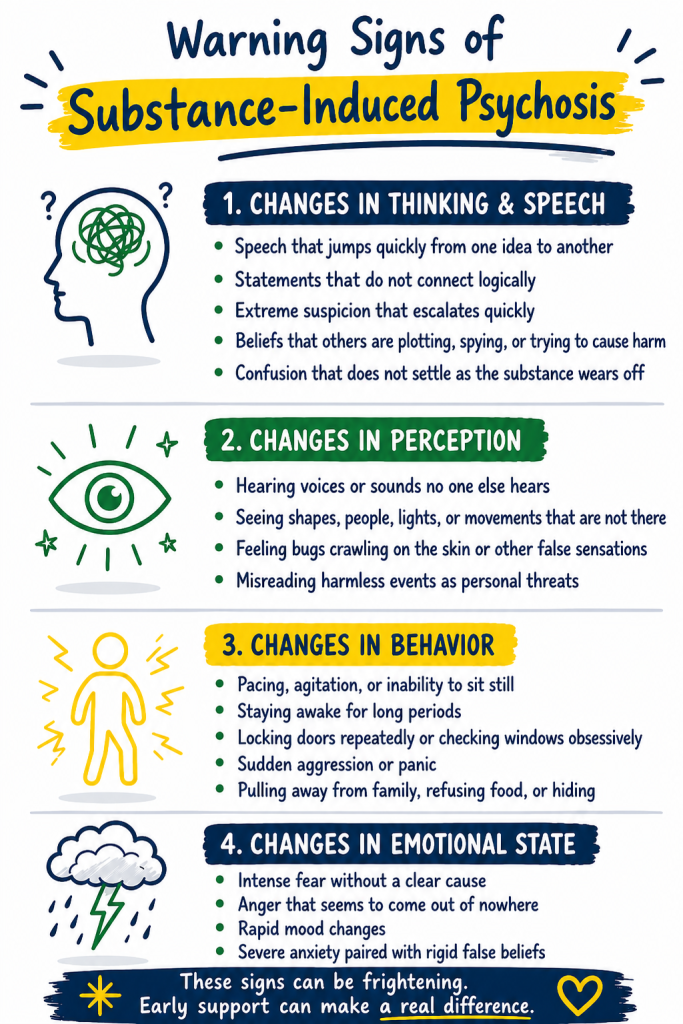
How Can You Recognize Substance-Induced Psychosis, Paranoia, and Hallucinations.png
These symptoms can appear during intoxication, during withdrawal, or during a period when an underlying mental health condition is being pushed into the open by substance use. That is why a full clinical assessment matters so much.
Substances That Can Trigger Paranoia and Hallucinations
Substance-induced psychosis is not linked to only one type of drug. Psychotic symptoms can develop during intoxication, heavy use, or withdrawal, and the risk may increase when substance use is combined with sleep loss, dehydration, poor nutrition, or an existing mental health condition.
| Substance | How It May Contribute to Psychosis |
| Methamphetamine | ParanoiaAgitationAnxietyHallucinations or delusions |
| Cocaine | Severe suspicion or paranoiaAgitationPsychotic symptoms during heavy use or repeated binges |
| Prescription stimulants | Increased risk when misused or taken in high dosesGreater concern with prolonged wakefulness or repeated use |
| Alcohol | Psychosis during heavy useHallucinations or confusion during severe withdrawal |
| Marijuana | Higher risk with frequent useGreater concern with high-potency productsParanoia or distorted thinking |
| Hallucinogens and synthetic drugs | HallucinationsDisorganized thinkingUnpredictable behavioral or psychological reactions |
| Prescription medications | Psychotic symptoms when misusedPossible reactions to certain medications, doses, or combinations |
| Polysubstance use | Unpredictable interactionsIncreased withdrawal risksSymptoms that are harder to evaluate and treat |
When several substances or risk factors are involved, identifying the exact cause can be difficult. A thorough clinical assessment helps determine whether symptoms are connected to intoxication, withdrawal, medication effects, or an underlying mental health disorder.
When It Is Time for Emergency Help
If a person is threatening self-harm, threatening others, becoming physically aggressive, wandering, unable to care for basic needs, or responding to voices or beliefs that place them or others at risk, emergency evaluation is appropriate. Psychosis can escalate quickly, and treatment depends on identifying the cause, stabilizing the person, and reducing immediate danger.
Serious warning signs include:
- Talking about suicide or death
- Saying they need to defend themselves from imagined threats
- Holding weapons or making violent statements
- Severe agitation with no ability to calm down
- Not sleeping for days
- Refusing food, water, or medical care because of delusional beliefs
- Confusion so severe that they cannot follow simple directions
In those situations, the goal is to get professional help and keep everyone safe. If there is immediate danger, call 911 or go to the nearest emergency room.
Why Dual Diagnosis Changes the Treatment Plan
Substance-induced psychosis does not always mean the symptoms are caused only by the substance. Sometimes substance use is the main driver. Sometimes substance use is sitting on top of bipolar disorder, trauma, major depression, schizophrenia-spectrum illness, or another mental health condition. Sometimes both are feeding each other. NIMH, NIDA, and SAMHSA all note that substance use disorders and mental health disorders often occur together and that treatment planning works best when both sides are evaluated and treated in a coordinated way.
This is where dual diagnosis care becomes essential. A person may look like they only need detox, but the full picture may include panic symptoms, trauma, depression, bipolar features, or persistent psychotic symptoms that need psychiatric support too. On the other hand, someone who appears to have a primary psychiatric disorder may also be stuck in a cycle of stimulant use, alcohol use, or withdrawal that keeps the crisis going.
A split approach can miss the mark. Sending someone to one place for addiction and another for mental health without coordination often leads to gaps, mixed messages, and poor follow-through. Integrated care is stronger because it looks at the whole pattern instead of treating one part and hoping the other settles down on its own.
Meth Psychosis Treatment Starts With Stabilization
Meth psychosis treatment needs to move quickly because the symptoms can become severe and unpredictable. Methamphetamine use can cause paranoia, anxiety, hallucinations, aggression, and psychotic behavior. It can also be linked to sleep deprivation, intense physical stress, and repetitive behaviors that worsen the overall crisis.
The first priority is stabilization. That may include medical monitoring, a safe setting, psychiatric evaluation, and treatment planning based on what symptoms are present, how long they have lasted, and whether the person is also facing withdrawal or another mental health condition. MedlinePlus notes that providers evaluate psychosis by looking at symptoms, medical causes, and substance use, and treatment depends on the underlying cause.
After the crisis is brought under control, the real work begins. A lasting plan usually needs more than a short break from the drug. It may require:
- Detox when withdrawal or early instability makes stopping unsafe
- Residential treatment when structure and monitoring are needed
- Psychiatric evaluation and medication management
- Therapy that addresses both thought patterns and substance use triggers
- Sleep restoration, routine, and medical support
- Relapse-prevention planning
- Continued care after the initial crisis passes
That is especially important with meth, because psychotic symptoms can leave fear, shame, and confusion behind even after the person is more stable. If treatment stops too early, the risk of returning to use or dropping back into the same mental state can stay high.
Treatment in Kansas City at Midwest Recovery Centers
When addiction and mental health symptoms overlap, treatment needs to account for both. Addressing only one side can leave the other untreated and make long-term stability harder to maintain.
Midwest Recovery Centers provides coordinated care for substance use disorders, primary mental health conditions, and co-occurring disorders in the Kansas City area. With separate addiction and mental health facilities, clients can access support ranging from medical detox and residential treatment to outpatient care, extended recovery services, and aftercare.
Medical Detox and Residential Treatment
The substance use treatment track starts with medical detox and residential care, which together make up the first 30 days.
During detox, clients receive medical supervision and support for withdrawal symptoms. Residential treatment then adds a structured daily schedule with evidence-based therapies such as CBT, ACT, and DBT, along with experiential groups, holistic activities, and 24/7 support. Medication-assisted treatment may be used during detox when appropriate.
Phase 1 and Phase 2 Extended Care
Some clients need more time and structure after the initial residential stay. Midwest Recovery Centers offers two additional phases of care:
- Phase 1: About 60 days
- Phase 2: Up to nine months based on clinical need and progress
Housing is included in both phases. These programs help clients strengthen recovery skills, build healthier routines, increase personal responsibility, and gradually return to work, school, or family life.
Community IOP Options
Community IOP provides structured treatment without requiring clients to live in program housing. This can work well for people who need ongoing support while continuing to manage work, school, parenting, or other responsibilities.
Midwest Recovery Centers has separate Community IOP programs for:
- Substance Use Disorder
- Mental Health
Medical and psychiatric services may include:
- Medication management
- Comprehensive psychiatric evaluations
- Transcranial Magnetic Stimulation
- Long-acting injectable medications
- PGx genetic testing
- Telemedicine support
Community IOP may serve as a step down from residential treatment or as an entry point when a higher level of care is not required.
Residential Care for Primary Mental Health Conditions
The 45-day Residential Mental Health Program focuses on primary mental health disorders rather than treating mental health symptoms only as part of addiction care.
The program combines psychiatric services, therapy, primary care, medication management, TMS, fitness support, nutrition services, and precision medicine in a structured residential setting. It may support people experiencing depression, anxiety, bipolar disorder, PTSD, schizophrenia, borderline personality disorder, and other complex conditions.
Outpatient Mental Health Support
Residential treatment is not always necessary. Outpatient mental health services are available for people who need consistent clinical support while continuing to live at home.
Care may include individual therapy, group therapy, psychiatric assessments, medication management, treatment planning, and progress-based goals. PGx testing is also available across levels of care to help clinicians make more informed medication decisions.
Coordinated Treatment for Co-Occurring Disorders
For clients living with both a substance use disorder and a mental health diagnosis, care is planned through a shared clinical model.
This allows treatment teams to address substance use, psychiatric symptoms, medication needs, triggers, and relapse risks together. The goal is to create one coordinated plan rather than two disconnected approaches.
Family Program
Families often need support of their own while a loved one is in treatment. Midwest Recovery Centers provides education and practical guidance to help relatives communicate more effectively, set healthier boundaries, and better understand the recovery process.
Family services include:
- Virtual Substance Use Disorder Family Programming: Thursdays from 6:30 to 8:00 PM CST
- Virtual Mental Health Family Support: Third Thursday of each month at 8:00 PM CST
- In-Person Family Education: First Wednesday of each month at 7:00 PM
Aftercare and Continued Recovery Support
The move from structured treatment back into daily life can bring new stress, responsibilities, and exposure to triggers. Aftercare gives clients continued support during that transition.
Services may include counselor check-ins, individual and group therapy, relapse-prevention planning, transition planning, and connection to community resources. This support can be especially valuable during the first year after treatment.
Long-Acting Injectable and Medication Services
Midwest Recovery Centers also provides continued medication support for clients who may benefit from long-acting injectable treatment.
Available options may include Brixadi, Sublocade, Vivitrol, and antipsychotic injectables. These services are coordinated with psychiatric care, counseling, and the client’s overall treatment plan.
For someone dealing with substance use, paranoia, hallucinations, mood changes, or other psychiatric symptoms, access to multiple levels of coordinated care can create a more stable path from crisis management to long-term recovery.
Treatment Outcomes at Midwest Recovery Centers
At Midwest Recovery Centers, we track progress through regular check-ins and tools such as the Brief Addiction Monitor. Our 2024–2025 outcomes data showed a 100% reduction in alcohol use, drug use, marijuana use, sedative use, and overall substance use while clients were in our care. Risk of use decreased by 64%, cravings dropped by about 55%, sleep problems improved by up to 81%, and mood concerns decreased by 75%. Clients also reported an approximately 80% improvement in satisfaction with recovery and a 26% improvement in spirituality.
Within our mental health programs, depression symptoms measured through the PHQ-9 decreased by 87%, while anxiety symptoms measured through the GAD-7 improved by as much as 78%. PTSD scores measured with the PCL-5 also showed a substantial downward trend across follow-ups. Individual results vary, but these outcomes reflect the progress that structured, consistent, and personalized treatment can support.
What Loved Ones Can Do Right Now
When someone is showing signs of psychosis, loved ones often feel pressure to fix it in one conversation. A calmer and safer response is the best step.
A few practical steps can help:
- Keep your voice steady and your language simple
- Avoid arguing about whether the hallucination or belief is real
- Focus on safety rather than proving a point
- Reduce stimulation if possible
- Do not leave children alone with a person in an unstable state
- Seek emergency help if there is any risk of violence, self-harm, or medical danger
- Arrange a professional assessment as soon as possible
What helps most is moving from panic to action. One phone call can start that process. A full assessment can clarify whether the person needs detox, residential treatment, psychiatric care, Community IOP, or a dual diagnosis plan that addresses both substance use and mental health symptoms together.
Start With the Right Level of Support
Psychosis, paranoia, and hallucinations are not small warning signs. They can point to a dangerous level of substance use, a psychiatric crisis, or both at the same time. The earlier those symptoms are recognized, the better the chance of stabilizing the person, reducing harm, and building a treatment plan that actually fits what is going on.
Midwest Recovery Centers provides medical detox, residential addiction treatment, Phase 1 and Phase 2 extended care with housing, Community IOP for substance use and mental health, residential mental health treatment, outpatient mental health services, family programming, aftercare, clinical services, and integrated support for co-occurring disorders in the Kansas City area.
If you are seeing these signs in yourself or someone you care about, contact our Midwest Recovery Centers team today. A clear next step can make the situation safer, calmer, and far more manageable.
FAQs
What is substance-induced psychosis?
Substance-induced psychosis is a loss of contact with reality connected to drug or alcohol use, medication effects, or withdrawal. Symptoms may include hallucinations, delusions, paranoia, and disorganized thinking.
What are the early signs of substance-induced psychosis?
Early signs may include growing suspicion, scattered speech, severe anxiety, unusual beliefs, prolonged wakefulness, agitation, social withdrawal, or reacting to sights and sounds that others do not experience.
Which substances can cause paranoia and hallucinations?
Methamphetamine, cocaine, prescription stimulants, alcohol, marijuana, hallucinogens, synthetic drugs, certain medications, and combinations of substances may contribute to paranoia, hallucinations, or psychosis.
When does substance-induced psychosis require emergency help?
Emergency help is appropriate when someone threatens self-harm or violence, carries a weapon, cannot calm down, refuses food or water, becomes severely confused, or responds dangerously to hallucinations.
How is substance-induced psychosis treated?
Treatment may begin with medical stabilization, detox, psychiatric evaluation, medication support, and sleep restoration. Continued addiction and mental health care may be needed when symptoms overlap with another condition.