

Key Takeaways:
- Recent alcohol or drug use does not automatically prevent detox admission. A clinical screening determines whether same-day care is safe and appropriate.
- Emergency care may be needed before detox if someone has breathing problems, seizures, severe confusion, chest pain, unconsciousness, or other life-threatening symptoms.
- Same-day detox depends on recent substance use, withdrawal history, current symptoms, medical needs, program requirements, and available space.
The decision to seek detox rarely arrives at a convenient time. It may come after a frightening night, a return to use, a serious conversation with someone you trust, or a moment when continuing feels more dangerous than asking for help. If alcohol or drugs were used earlier that day, it is easy to assume treatment has to wait. In many cases, it does not.
Recent alcohol or drug use does not automatically prevent someone from being evaluated for admission to a detox program. A Same-day detox Kansas City admission may be possible, but the treatment team must first assess the person’s current condition, substance-use history, withdrawal risk, medical needs, and immediate safety. Availability also matters, which is why calling before traveling to a facility is important.
Waiting to become fully sober on your own can create added risk, particularly after heavy or prolonged alcohol use. Alcohol withdrawal can become dangerous, and opioid use can carry an overdose risk that requires emergency action rather than routine admission. The safest move is to contact a qualified admissions team as soon as the person is willing to accept help.
A confidential call can clarify whether detox is appropriate, what should happen next, and whether emergency care is needed first.
At Midwest Recovery Centers, we help people in the Kansas City area find the level of care that fits their current needs. That process can begin even when the last drink or dose was only hours ago.
“When someone calls us after drinking or using drugs that same day, our priority isn’t judging how recently they used, but it’s figuring out what they need to be safe right now. A same-day detox in Kansas City starts with an honest clinical assessment of recent alcohol or drug use, withdrawal risk, medical history, and current symptoms. That information helps our team determine whether medical detox is appropriate or whether another level of care needs to come first. Reaching out sooner gives us the opportunity to help make that decision safely.”
– Taylor Brown, CRADC
Same-Day Detox in Kansas City May Be Possible After Recent Use
A person does not always have to wait until every effect of alcohol or drugs has worn off before contacting a detox center. In fact, the admissions team needs an honest account of what was used, how much was taken, when it was taken, and what symptoms are happening now.
That information helps clinicians decide whether the person can safely enter detox, needs emergency medical care, or requires another level of support.
Same-day placement is never something a responsible provider should promise without screening.
Our admissions process begins with a confidential conversation designed to identify the safest and most appropriate starting point. Midwest Recovery Centers offers medical detox near Kansas City with round-the-clock nursing supervision, followed by residential and longer-term treatment options when clinically appropriate.
The key point is to not hide recent use and not wait to call because of it. Accurate information gives the clinical team a better chance to plan safe care.
Why Does the Last Drink or Dose Matter?
The timing of recent use helps the medical team anticipate what may happen over the next several hours. Intoxication, overdose, withdrawal, medication interactions, and mental health symptoms can overlap.
Two people who used the same substance on the same day may still need very different care.
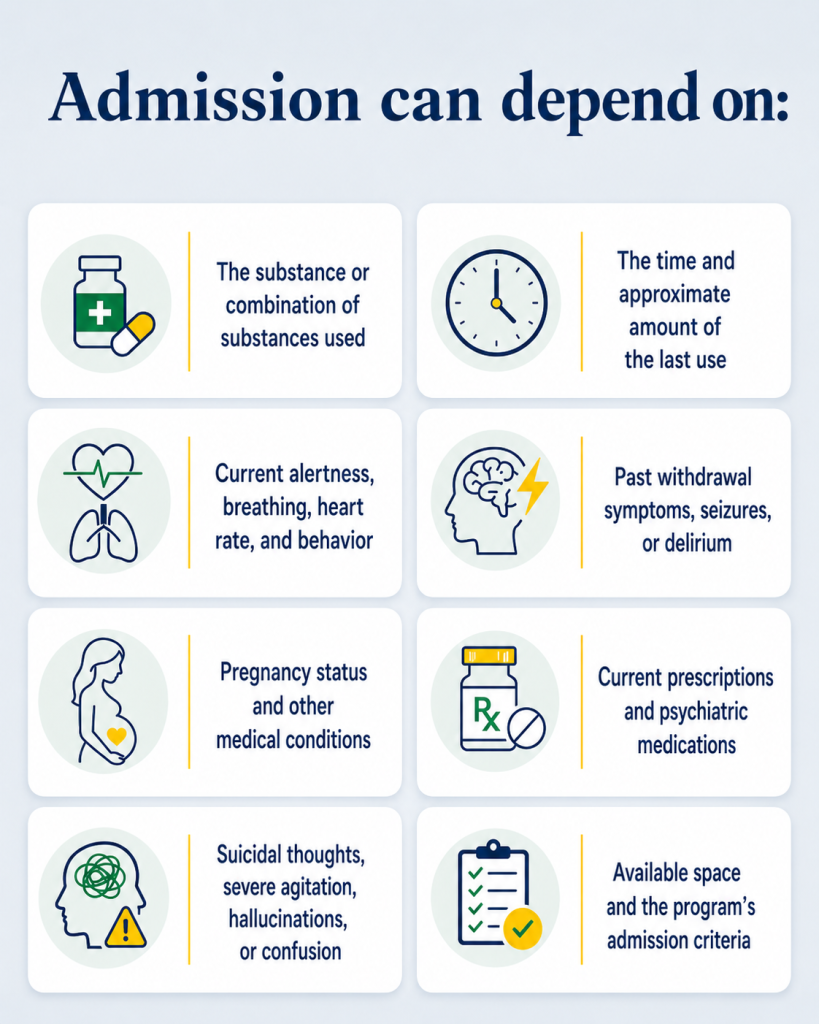
During an initial screening, the admissions coordinator or clinician may ask about:
- The primary substance being used
- Other substances used at the same time
- Frequency and duration of use
- The last known amount and time of use
- Prior detox attempts
- Previous withdrawal seizures or hallucinations
- Overdose history and whether naloxone was used
- Medical diagnoses, injuries, or recent hospital visits
- Mental health symptoms and current medications
- Whether the person can travel safely
These questions help determine whether the person is stable enough for direct admission and what medical monitoring may be required.
Mixed substance use must also be reported. Combining alcohol, opioids, benzodiazepines, stimulants, marijuana, or prescription medications can make symptoms less predictable. Leaving out a substance because it feels embarrassing can make medical planning harder.
The admissions team is not asking for a perfect explanation. They need the most accurate information available so they can make safer decisions.
When Emergency Care Comes Before Kansas City Detox
Some situations require 911 or an emergency department before a standard detox admission can begin. A detox center is not a substitute for emergency treatment during an overdose, severe intoxication, major injury, or another life-threatening event.
Call 911 immediately if the person:
- Cannot be awakened or is losing consciousness
- Has slow, shallow, stopped, or difficult breathing
- Makes choking, gurgling, or unusual snoring sounds while unresponsive
- Has blue, gray, pale, or unusually cold lips or skin
- Experiences a seizure
- Has severe chest pain
- Shows extreme confusion, hallucinations, or uncontrolled agitation
- Has taken an unknown substance and is rapidly getting worse
- Has threatened or attempted suicide
- May have suffered a serious fall, head injury, or accident
The CDC advises treating a suspected opioid overdose as an emergency. Naloxone should be given when available, but 911 still needs to be called because its effects may wear off while opioids remain in the body.
Heavy, long-term alcohol use also deserves prompt medical attention. Stopping suddenly can lead to nausea, rapid heart rate, seizures, hallucinations, and other serious complications. NIAAA warns that alcohol withdrawal can be potentially life-threatening for some people.
Do not drive someone to treatment if that person is severely impaired, medically unstable, aggressive, or difficult to awaken. Emergency medical services can provide care during transportation and direct the person to the appropriate setting.
What Happens During a Same-Day Detox Admission in Kansas City?
The process often moves faster when accurate information is available from the first call. Each admission is different, but several steps are common.
1. A Confidential Admissions Call
The first conversation focuses on the immediate situation. The coordinator may ask what was used, when it was used, whether the person is currently safe, and whether there are urgent medical or psychiatric symptoms.
The call can also cover insurance verification, transportation, current medications, and what to bring. Calling ahead reduces the chance of traveling to the wrong level of care.
2. A Clinical Pre-Screening
The screening helps determine whether detox is likely to be the correct entry point.
Someone who is actively overdosing may need an emergency department. A person who is medically stable but at risk for withdrawal may be appropriate for supervised detox. Another person may be directed toward residential treatment, Community IOP, mental health treatment, or a different service based on clinical need.
3. Safe Transportation and Arrival
The person should not drive after using anything that affects judgment, coordination, or reaction time. A sober support person, an approved transportation option, or emergency services may be needed.
Once the person agrees to seek care, keep the next steps calm and direct. Arguments, threats, and last-minute negotiations can make it harder to follow through.
The admissions team can help explain the safest arrival plan based on the person’s condition.
4. Medical and Psychiatric Assessment
Upon arrival, clinicians review substance use, withdrawal history, vital signs, medications, medical conditions, and mental health symptoms. This evaluation guides the treatment plan and helps the team watch for possible complications.
At Midwest Recovery Centers, detox includes 24/7 nursing supervision in a residential setting. Care is designed to reduce risk, manage withdrawal symptoms, and prepare clients for continued treatment rather than treating detox as a stand-alone event.
5. Withdrawal Care Begins
Withdrawal symptoms do not always begin immediately after the last drink or dose. The onset and intensity can vary based on the substance, amount, frequency of use, physical health, and prior withdrawal history.
Medical staff monitor symptoms and respond as the clinical picture changes.
Medication-assisted treatment is offered during Detox at Midwest Recovery Centers when clinically appropriate. That service is specific to the Detox level of care.
6. Planning Continues Beyond Detox
Detox addresses the body’s immediate response to stopping a substance, but it does not resolve the behavioral, emotional, social, and mental health factors connected to addiction.
Detox is the management of withdrawal symptoms and notes that it is noted to be only an initial part of treatment.
At our center, detox and residential treatment make up the first 30 days of the substance use track. Clients may then move into Phase 1 and Phase 2 extended care based on their clinical needs.
How Can the Substance Used Change the Detox Plan?
The substance involved can change both the withdrawal risks and the type of support needed during detox. Recent use, tolerance, health conditions, medications, and the use of multiple substances can also affect the plan.
A previous detox experience does not always predict what will happen this time.
| Substance | Possible Withdrawal or Risks | Detox Considerations |
| Alcohol | ShakingSweatingNauseaAnxietySleep problemsSeizures or hallucinations in severe cases | Heavy use may require medical monitoringPast severe withdrawal increases riskSymptoms may worsen as alcohol levels fall |
| Opioids, Heroin, Fentanyl, and Prescription Pain Medications | NauseaMuscle achesAnxietyStrong cravingsSevere discomfortOverdose risk during active use | Report the timing of recent useMedication timing may matterUnknown fentanyl exposure is possibleOverdose symptoms require emergency care |
| Benzodiazepines and Sedatives | AnxietyTremorsSleep problemsAgitationSeizure risk | Abrupt stopping can be dangerousReport the medication and doseShare the time of the last doseDisclose alcohol or opioid use |
| Methamphetamine and Cocaine | FatigueDepressionAnxietySleep changesStrong cravingsParanoia or agitation | Chest pain may require emergency careRecent use should be reportedFentanyl exposure may be possibleMixed substance use affects risk |
| Marijuana and Other Substances | IrritabilityAnxietyRestlessnessSleep disruptionReduced appetite | Detox needs depend on the full clinical pictureMultiple substances should be reportedMental health symptoms are also evaluated |
At Midwest Recovery Centers, we treat substance use involving alcohol, opioids, heroin, methamphetamine, cocaine, marijuana, prescription medications, and multiple substances used together.
The safest detox plan is based on what is happening now. Sharing complete information about recent substance use, medications, past withdrawal symptoms, and mental health concerns helps our clinical team determine the appropriate level of care.
What Should You Do Before Calling for Same-Day Detox?
You do not need to organize every detail before reaching out. Still, gathering a few facts can make the screening faster and more accurate.
Try to have the following available:
- The person’s full name and date of birth
- The substances used in the past several days
- The approximate time and amount of the most recent use
- Current symptoms
- Prior withdrawal, seizure, or overdose history
- Prescription medications and known allergies
- Major medical or mental health diagnoses
- Insurance information, when available
- A safe phone number for follow-up
- A realistic transportation plan
Do not give the person extra alcohol, pills, or other drugs to make the trip easier unless a licensed medical professional has specifically directed it.
Do not encourage abrupt withdrawal at home while waiting for admission guidance. Call first and follow the instructions provided by the clinical or emergency team.
It also helps to keep the environment quiet. Too many people arguing, negotiating, or demanding promises can make it harder for the person to stay focused on accepting care. One calm support person can gather information, make the call, and help coordinate transportation.
Why Can Waiting Until Tomorrow Be Risky?
The window in which someone accepts help can be brief. Fear, cravings, withdrawal discomfort, shame, and second thoughts can quickly change a firm decision into another delay.
There is also a medical reason not to guess.
A person may seem stable while intoxicated and become much sicker as the substance wears off. Alcohol withdrawal can intensify after the last drink. Opioid use can lead to overdose, especially after a return to use, changes in tolerance, or exposure to fentanyl.
Mixed substances can complicate both intoxication and withdrawal.
Calling now does not force anyone into a program. It creates a chance to assess the situation while the person is willing to talk. If direct admission is not appropriate, the team can explain the next safest step.
A responsible Kansas City Detox provider will not tell every caller the same thing. Good care starts with the person’s actual condition, not a preset response.
Midwest Recovery Centers Services
Midwest Recovery Centers was founded in 2016 to fill a gap in comprehensive behavioral health treatment in the Kansas City area.
We have grown into the region’s only private provider offering every level of care, from detox to long-term extended support. Our programs address addiction, primary mental health disorders, and co-occurring conditions through small-scale, personalized care.
Medical Detox and Residential Treatment
Our substance use track begins with Medical Detox and Residential care for the first 30 days.
Detox provides supervised withdrawal care with 24/7 staffing and medication-assisted treatment when clinically appropriate. Residential treatment then adds structure, therapy, clinical planning, holistic activities, and experiential group work.
Therapeutic approaches may include:
- Cognitive behavioral therapy
- Acceptance and commitment therapy
- Dialectical behavior therapy
- Rational emotive behavior therapy
- Experiential group therapy
- Holistic activities
- Support-group integration
Treatment plans are personalized and supported by ongoing medical and psychiatric assessments, goal setting, and progress reviews.
Phase 1 and Phase 2 Extended Care With Housing
After the first 30 days, clients may transition to Phase 1 for about 60 days. Phase 2 may continue for up to nine months, depending on clinical need.
Housing is part of both Phase 1 and Phase 2.
These programs provide a continuing level of structured care rather than an abrupt return to independent living. Clients have more time to strengthen routines, practice coping skills, build accountability, and prepare for community reintegration.
Phase 1 and Phase 2 function much like continuing inpatient support. Clients gain greater independence gradually while remaining connected to housing, structure, clinical services, and accountability.
Community IOP for Addiction and Mental Health
We offer two Community Intensive Outpatient Programs:
- Community IOP for Substance Use Disorder
- Community IOP for Mental Health
Community IOP is designed for people who do not want, or are not able, to commit to the long-term housing component. It can be a starting level of care or part of a step-down plan, depending on the person’s clinical needs.
Medical oversight is available in both Community IOP tracks and may include:
- Medication management
- Psychiatric evaluations
- Transcranial Magnetic Stimulation
- Long-Acting Injectable medications
- PGx genetic testing
- Telemedicine
Clients in both our substance use and mental health tracks can benefit from these medical services.
Residential and Outpatient Mental Health Treatment
Our Residential Mental Health Program is a 45-day program built for primary mental health disorders, not only mental health symptoms that occur alongside addiction.
Care may include:
- Individual and group therapy
- Medication management
- Psychiatric support
- Primary care
- Fitness and movement
- Nutrition support
- TMS
- Precision medicine
We also provide outpatient mental health services.
Outpatient care can follow residential treatment, but it does not have to. Some clients begin with outpatient services when that level offers the right mix of structure, clinical support, and independence.
Co-Occurring Disorder Care
Addiction and mental health symptoms can reinforce each other. Anxiety, depression, trauma symptoms, mood instability, and substance use may all need attention within the same treatment plan.
Our shared model supports clients who have both a substance use disorder and a mental health diagnosis.
Rather than sending each concern in a separate direction, the clinical team coordinates therapy, psychiatric care, medical services, and ongoing treatment planning.
PGx genetic testing is available at all levels of care. It can provide clinicians with information about how a person may metabolize certain medications, helping guide prescribing decisions while recognizing that genetic results cannot guarantee a specific outcome.
Family Programming
Addiction and mental illness affect the larger support system, so we provide education and support for loved ones.
Our current family schedule includes:
- Virtual Substance Use Disorder Family Programming: Thursdays from 6:30 to 8:00 p.m. CST. This four-part monthly rotation covers addiction education, healthy support, family boundaries, and family recovery.
- Virtual Family Program for Mental Health: The third Thursday of each month at 8:00 p.m. CST, focused on connection, encouragement, and practical coping tools.
- In-Person Family Education: “Supporting Their Next Steps: An Aftercare Info Session for Families,” held the first Wednesday of each month at 7:00 p.m. at our Main Outpatient Campus, 13340 Holmes Road, Kansas City, Missouri 64145.
Aftercare
Our Aftercare program supports long-term sobriety as clients move from structured treatment into everyday life.
Personalized planning may include:
- Regular counselor check-ins
- Individual or group therapy
- Relapse-prevention planning
- Goal reviews
- Community support
- Help adjusting to daily responsibilities
Continued contact helps clients respond to new pressures and triggers before a setback grows into a crisis. Aftercare also provides space to adjust plans and stay connected.
What Makes Our Kansas City Detox Approach Different?
Detox is safer and more useful when it connects directly to a broader treatment plan.
Our approach treats the whole person across mind, body, and spirit while keeping care personal enough for clients to feel seen and heard.
Several principles guide our work:
- Personalized care: Treatment is built around the individual’s clinical needs, goals, history, and progress.
- Small-scale settings: We keep programs personal rather than allowing clients to disappear inside a large system.
- Full-continuum support: Clients can move from detox and residential treatment into extended care, Community IOP, outpatient services, family support, and aftercare.
- Integrated behavioral health: Addiction, primary mental health needs, and co-occurring disorders can be addressed within one organization.
- Inclusivity and respect: We work to remove barriers and treat clients equitably across race, gender, sexual orientation, background, and identity.
- 24/7 support at higher levels of care: Detox and residential clients receive continuous staffing and monitoring.
- A culture of service and teachability: Our team remains open to feedback, growth, and the individual needs of every client.
Support does not end when withdrawal symptoms ease. Long-term change usually requires more time, practice, clinical care, and connection.
What Does Same-Day Admission Not Guarantee?
A Same-day detox Kansas City call is a request for immediate assessment, not an automatic promise of placement.
The team may need to confirm clinical eligibility, review current safety, evaluate medical needs, verify insurance benefits, and check availability.
Possible outcomes may include:
- Direct admission to medical detox
- Emergency department evaluation before detox
- Admission at the earliest available time with interim safety instructions
- Referral to another level of care
- A recommendation for residential treatment
- Placement in Community IOP
- Mental health treatment instead of substance use detox
- A higher-acuity medical or psychiatric placement
That uncertainty is not a reason to delay. Calling creates a path forward, even when the final placement changes after screening.
Start Your Recovery Now
Drinking or using drugs earlier today does not mean treatment has to wait until tomorrow. It does mean the admissions team needs honest, current information so they can help determine the safest next step.
Our team can complete a confidential screening, discuss Kansas City Detox options, review insurance benefits, explain what to bring, and help coordinate an appropriate admission plan.
The right time to reach out is not after everything has been neatly resolved. It is when help is needed, and the person is willing to take the next step.
Contact the Midwest Recovery Centers admissions team today.
FAQs
1. Can you enter detox if you drank alcohol earlier the same day?
Yes. Drinking earlier in the day does not automatically prevent detox admission. The treatment team will evaluate when and how much alcohol was consumed, current symptoms, withdrawal history, medical stability, and other safety concerns before recommending the appropriate level of care.
2. Can you go to detox while drugs are still in your system?
In some cases, yes. A person does not always need to wait until every effect of a drug has worn off before contacting a detox program. Clinicians need accurate information about the substance, amount, timing of use, symptoms, and other medications or substances involved.
3. When should someone go to the emergency room instead of detox?
Emergency care should come first if someone cannot be awakened, has slow or difficult breathing, experiences a seizure, develops severe chest pain or confusion, has serious injuries, shows signs of an overdose, or may harm themselves or someone else.
4. What information is needed for a same-day detox admission?
Admissions staff may ask about substances used, the approximate time and amount of the most recent use, current symptoms, past withdrawal or seizures, overdose history, prescription medications, medical and mental health conditions, insurance information, and transportation.
5. Is same-day detox admission guaranteed after calling?
No. A same-day detox call starts an immediate assessment rather than guaranteeing placement. The final recommendation may involve direct detox admission, emergency medical evaluation, residential treatment, outpatient care, another clinical service, or admission when appropriate space becomes available.