

Key Takeaways:
- Psychiatric stabilization addresses immediate safety, but symptoms, medication changes, suicide risk, and daily functioning may still require structured care after hospital discharge.
- Residential mental health treatment can provide daily structure, therapy, medication monitoring, and continued assessment for people who need more support than outpatient appointments provide.
- The appropriate next step may include residential care, Community IOP, outpatient treatment, or continued hospitalization based on current symptoms, safety, and support needs.
An emergency psychiatric stay can prevent an immediate crisis from becoming more dangerous. It may provide a protected setting during suicidal thoughts, severe depression, mania, psychosis, intense agitation, medication complications, or a period when someone cannot remain safe at home.
A person may leave the hospital calmer, sleeping better, or no longer at immediate risk. Yet the symptoms that led to the crisis may still need close attention. Medications may have changed. A diagnosis may remain provisional. Family relationships, work demands, substance use, or an unstable home environment may continue to place pressure on the person.
The transition after discharge matters because hospital-level structure ends quickly. Appointments, prescriptions, transportation, safety planning, and daily support must all work together outside the hospital.
For some people, outpatient appointments provide enough support. Others need a more structured setting before returning fully to home, work, school, or family responsibilities. Residential mental health treatment in Kansas City can help bridge that gap by offering daily clinical care, medication oversight, therapeutic structure, and time to build greater stability.
At Midwest Recovery Centers, our 45-day Residential Mental Health Program treats primary mental health disorders in a small, personalized setting. Our admissions team can review the hospital discharge plan, current symptoms, medications, and safety needs to determine whether residential care, Community IOP, outpatient mental health services, or another option may be appropriate.
“Emergency psychiatric stabilization can help someone get through an immediate crisis, but hospital discharge does not always mean the underlying symptoms have fully resolved. Care after psychiatric hospitalization may still need to address medication changes, safety concerns, sleep, mood, substance use, and daily functioning. For some people, residential mental health treatment in Kansas City provides the structure and clinical support needed to build on the stability created in the hospital and prepare for a safer return to everyday life.”
– Taylor Brown, CRADC
What Does Emergency Psychiatric Stabilization Accomplish?
Emergency psychiatric stabilization focuses on reducing immediate danger and helping a person reach a safer, more manageable condition. The exact approach depends on the symptoms that led to hospitalization, but care is generally short-term and centered on acute needs.
Emergency psychiatric stabilization can help:
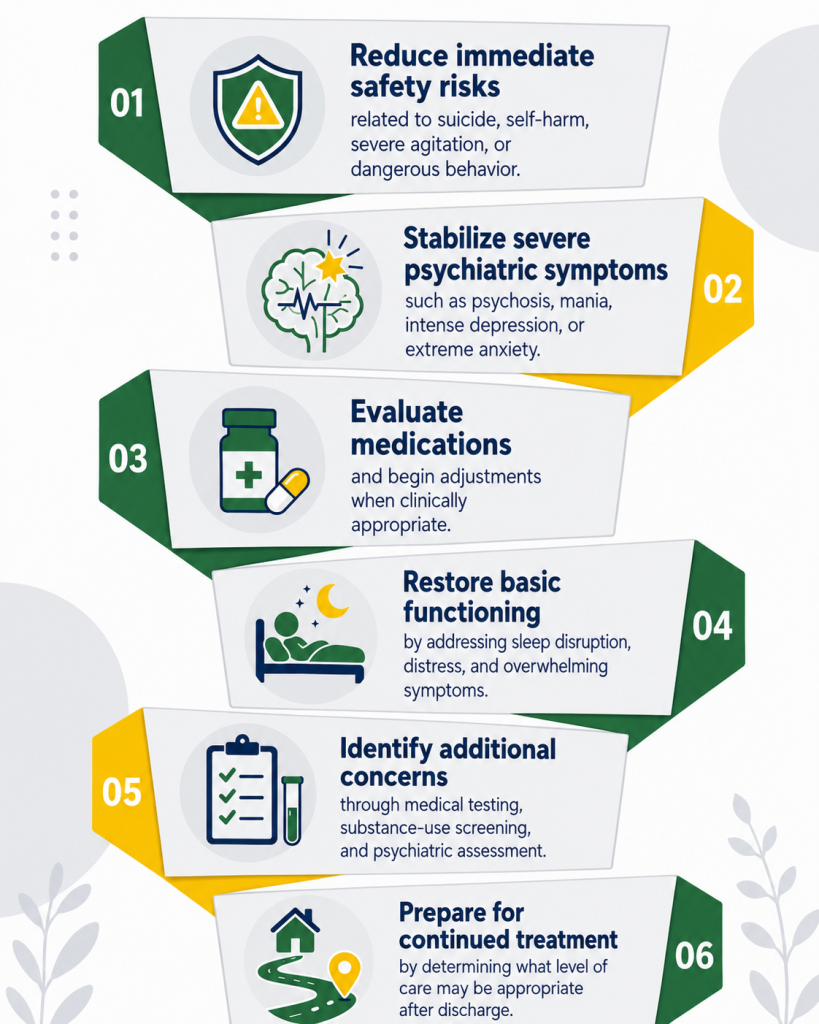
Hospital discharge usually means the person has improved enough to leave that specific level of acute care. Symptoms may still require treatment, medications may need continued monitoring, and support may still be necessary at home or in another treatment setting.
The next level of care should reflect the person’s remaining symptoms, safety needs, support system, and ability to function outside the hospital.
Why Is Care After Psychiatric Hospitalization So Important?
The loss of hospital structure can be abrupt. One day, the person has staff nearby, scheduled medication, regular meals, clinical check-ins, and limited access to dangerous items. The next day, they may be expected to arrange transportation, fill prescriptions, return phone calls, manage family tension, and follow a safety plan while still recovering from a serious episode.
That transition can be emotionally and practically difficult.
Suicide risk may remain elevated for months after psychiatric discharge. Its care-transition guidance emphasizes direct coordination, rapid follow-up, safety planning, and continued contact rather than relying on the patient to organize every part of care alone.
Strong care after psychiatric hospitalization may need to address:
- Ongoing suicidal thoughts
- Medication side effects
- Sleep disruption
- Depression or anxiety
- Manic symptoms
- Hallucinations or paranoia
- Difficulty completing daily tasks
- Alcohol or drug use
- Conflict at home
- Missed work or school
- Transportation barriers
- Isolation
- Fear of returning to ordinary responsibilities
A person can be medically cleared for discharge and still need significant behavioral health support.
The goal is not to keep someone in the most restrictive setting longer than necessary. It is to avoid moving from intensive care to minimal support before the person is ready.
What Should Be Included in a Psychiatric Discharge Plan?
A discharge plan should give the patient and their support system a clear picture of what happens next. It should cover treatment needs, medications, safety concerns, follow-up care, and practical arrangements before the person leaves the hospital.
| Discharge Planning Area | What Should Be Included | Why It Matters |
| Diagnosis and Treatment Summary | Current or working diagnosesTreatment receivedRelevant medical recordsSubstance-use concerns | Helps the next provider continue care with accurate information. |
| Medication Plan | Current medication listRecent changesDiscontinued medicationsSide effects to monitor | Reduces medication errors and supports safer follow-up care. |
| Follow-Up Care | Upcoming appointmentsTherapy recommendationsRecommended level of careProvider contact information | Helps prevent gaps in treatment after discharge. |
| Safety Planning | Personalized safety planEarly warning signsEmergency symptomsCrisis response steps | Gives the person and loved ones a clear plan if symptoms worsen. |
| Practical Arrangements | Transportation plansWork or school guidanceFamily responsibilitiesNext-step instructions | Makes the transition home or into treatment easier to manage. |
A strong discharge plan should also reflect how much support the person still needs. When residential treatment or Community IOP is being considered, contacting the program before discharge can help reduce delays and give the receiving team time to review clinical information.
How Does Residential Mental Health Treatment Fit After a Hospital Stay?
Residential treatment can provide a step between acute hospitalization and fully independent living. Clients live in a structured setting where they can participate in therapy, receive psychiatric support, monitor medications, rebuild routines, and prepare for continued care.
At Midwest Recovery Centers, our Residential Mental Health Program provides 45 days of structured care for primary mental health conditions. Case management begins early so discharge and aftercare planning can develop throughout treatment.
This setting gives the clinical team more time to observe symptoms, evaluate medication response, and support daily functioning. The focus shifts from immediate crisis stabilization toward coping skills, greater stability, and preparation for life after residential care.
Who May Benefit From Residential Mental Health Treatment in Kansas City?
Residential care may be appropriate for someone who has stabilized enough to leave the hospital but still needs more structure and support than standard outpatient care can provide.
People who may benefit include those who:
- Continue to struggle with significant symptoms
- Have experienced repeated hospitalizations
- Need closer medication monitoring
- Have an unstable or highly stressful home environment
- Struggle with daily functioning
- Need more time for diagnostic observation
- Have both substance use and psychiatric concerns
- Need additional time to build coping skills
- Lack enough support or supervision at home
Residential placement still requires an individual assessment. The receiving team may review recent hospitalization details, current safety risks, medications, medical needs, substance use, and the person’s ability to participate in treatment.
Someone experiencing an immediate suicide risk, severe medical instability, or a need for constant emergency monitoring may still require hospital-level care before residential treatment becomes appropriate.
What Happens During the First Days After Admission?
The early part of residential care focuses on assessment, orientation, safety, and creating a workable daily rhythm.
The client may arrive tired, uncertain, or emotionally drained after hospitalization. They may also feel frustrated by medication changes or worried that another treatment setting will be restrictive.
A thoughtful admission process helps reduce that uncertainty.
Reviewing the Hospital Episode
The residential team needs to know:
- What led to hospitalization
- Which symptoms were present
- Whether suicidal thoughts or behavior occurred
- What medications were started or stopped
- Whether substances were involved
- What improved during the stay
- What concerns remained at discharge
Hospital records can help, but the client’s own account remains important.
Reassessing Safety
Safety needs may change after discharge.
The residential team may review current suicidal thoughts, self-harm urges, impulsivity, hallucinations, sleep, mood, and access to dangerous items. A safety plan should be specific enough to guide action rather than relying on general promises.
Research supported by NIMH has found that personalized safety planning and structured follow-up after emergency psychiatric care can reduce suicidal behavior and improve engagement with treatment.
Rebuilding Basic Routines
Mental health crises can disrupt basic daily routines, including sleep, meals, hygiene, medication consistency, physical activity, social connection, and regular work or school schedules.
Residential structure creates repeated opportunities to restore those routines. Small improvements in sleep and daily functioning can also give clinicians a clearer view of which symptoms remain once severe exhaustion and chaos begin to settle.
Establishing Treatment Goals
Goals should reflect what the client needs to do outside treatment.
That might include:
- Managing panic without emergency care
- Recognizing early signs of mania
- Reducing self-harm behavior
- Improving medication consistency
- Returning gradually to work
- Communicating more safely with relatives
- Addressing trauma symptoms
- Reducing substance use
- Building a dependable outpatient plan
Goals should be reviewed as the person’s condition changes.
How Are Medications Managed After Psychiatric Hospitalization?
Hospital medication changes often need continued monitoring.
A psychiatric medication may take time to reach its full effect. Side effects may appear after discharge, or the person may have questions that were difficult to address during a short hospital stay.
The next treatment provider should review:
- Medications taken before hospitalization
- Medications started in the hospital
- Dose changes
- Discontinued prescriptions
- Side effects
- Missed doses
- Allergies
- Past medication responses
- Alcohol or drug interactions
- Physical health conditions
No one should restart an old medication, double a dose, or stop a new prescription without speaking with the appropriate clinician.
At Midwest Recovery Centers, medication planning may include psychiatric evaluations, medication management, and PGx genetic testing. PGx testing is available across our levels of care and may offer information about how a client metabolizes certain medications. It does not diagnose a condition or guarantee that a medication will work.
Medication is only one part of care. Sleep, therapy participation, substance use, physical health, stress, and daily functioning also help the team assess whether the overall plan is working.
What If Residential Treatment Is Not the Right Level of Care?
Not everyone leaving psychiatric stabilization needs residential treatment.
Some clients may be able to live safely at home with structured outpatient services. Others may still need a hospital or a more intensive psychiatric setting.
Possible recommendations include:
- Continued psychiatric hospitalization
- Residential mental health treatment
- Community IOP for mental health
- Outpatient therapy
- Psychiatric medication management
- Community IOP for substance use disorder
- Medical detox and residential addiction care
- Primary care or specialty medical follow-up
Community IOP may be useful when the person needs structured treatment but does not require or cannot commit to residential housing.
Midwest Recovery Centers offers separate Community IOP tracks for Mental Health and Substance Use Disorder. Medical oversight is available in both tracks and may include medication management, psychiatric evaluations, TMS, Long-Acting Injectable medications, PGx testing, and telemedicine.
Outpatient mental health treatment can also be a starting point. It does not have to follow residential care. The correct placement depends on current safety, symptom severity, support at home, and the person’s ability to participate consistently.
What Warning Signs Require Immediate Psychiatric Help?
Emergency services should be contacted when the person cannot remain safe outside an acute setting.
Call 911 or go to the nearest emergency department when someone:
- Has current intent to die
- Has a suicide plan and access to the means
- Has made a suicide attempt
- Is severely psychotic or disconnected from reality
- Is threatening serious harm
- Cannot be awakened
- Has a seizure
- Is experiencing a suspected overdose
- Is dangerously agitated
- Cannot care for basic physical needs
- Has stopped medication and is rapidly deteriorating
- Is experiencing severe confusion or a sudden medical change
Do not drive someone who is violent, medically unstable, unconscious, or likely to attempt harm during transportation.
A return to emergency care does not erase the progress made during treatment. It means the level of risk has changed and immediate protection is needed again.
Midwest Recovery Centers Services
Midwest Recovery Centers provides personalized behavioral health treatment in the Kansas City area for individuals facing addiction, primary mental health concerns, and co-occurring conditions.
Our programs offer a broad range of care in smaller, supportive settings where treatment can remain flexible and focused on the individual. We take a whole-person approach that considers the mind, body, and spirit while promoting respect, inclusion, service, and personal growth.
Residential Mental Health Treatment
Our 45-day Residential Mental Health Program is designed for primary mental health disorders, not only symptoms occurring alongside addiction.
Treatment may include:
- Individual therapy
- Group therapy
- Psychiatric care
- Medication management
- Primary care coordination
- TMS
- PGx genetic testing
- Nutrition support
- Fitness
- Case management
- Whole-person activities
- Continued-care planning
The residential setting provides time to evaluate symptoms, monitor medications, build coping skills, and create a stronger plan for life after treatment.
Outpatient Mental Health Services
Outpatient mental health care may follow residential treatment, but it does not have to.
Some clients begin directly with outpatient services when they can live safely at home while attending therapy, psychiatric appointments, and other recommended services.
Community IOP for Mental Health and Substance Use
We offer two Community Intensive Outpatient Programs:
- Community IOP for Mental Health
- Community IOP for Substance Use Disorder
These programs are designed for clients who do not want, or are not able, to commit to long-term housing.
Medical oversight is available in both tracks and may include:
- Medication management
- Comprehensive psychiatric evaluations
- Transcranial Magnetic Stimulation
- Long-Acting Injectable medications
- PGx genetic testing
- Telemedicine
Detox and Residential Addiction Treatment
Our substance use track begins with Detox and Residential care during the first 30 days.
Medical Detox provides supervised withdrawal support for alcohol and drugs. Medication-assisted treatment is available only during Detox when clinically appropriate.
Residential addiction treatment may include:
- Cognitive behavioral therapy
- Acceptance and commitment therapy
- Dialectical behavior therapy
- Rational emotive behavior therapy
- Individual and group therapy
- Experiential group work
- Holistic activities
- Support-group integration
- Medical and psychiatric assessments
- Personalized treatment planning
We treat substance use involving alcohol, heroin and other opioids, methamphetamine, cocaine, marijuana, prescription drugs, and multiple substances.
Phase 1 and Phase 2 Extended Care
After the first 30 days of Detox and Residential care, clients may move into Phase 1 for approximately 60 days.
Phase 2 may continue for up to nine months, depending on clinical need. Housing is included in both phases.
These programs provide continuing inpatient-style structure while clients gradually build independence, strengthen routines, and remain connected to clinical support.
Clinical and Co-Occurring Care
Our clinical services include ongoing medical and psychiatric assessments, personalized treatment plans, medication oversight, goal setting, and progress reviews.
PGx genetic testing is available across all levels of care. For clients experiencing both addiction and a mental health diagnosis, our shared treatment model allows those concerns to be addressed through a coordinated plan.
Family Programming
Our Family Program provides education, counseling, connection, and practical tools for loved ones affected by addiction or mental illness.
Virtual Substance Use Disorder Family Programming takes place on Thursdays from 6:30 to 8:00 p.m. Central Time through a four-part monthly rotation:
- First Thursday: Addiction education, causes, family dynamics, and what to expect at Midwest Recovery Centers
- Second Thursday: Enabling, healthy support, grief, and codependency
- Third Thursday: Healthy boundaries before, during, and after treatment
- Fourth Thursday: Detaching with love, self-care, and changing family roles
The Virtual Family Program for Mental Health meets on the third Thursday of each month at 8:00 p.m. Central Time.
Our in-person session, “Supporting Their Next Steps: An Aftercare Info Session for Families,” is held on the first Wednesday of each month at 7:00 p.m. at our Main Outpatient Campus, 13340 Holmes Road, Kansas City, Missouri 64145.
Aftercare
Our Aftercare program supports long-term sobriety and stability as clients move from structured care into everyday life.
Personalized support may include:
- Regular counselor check-ins
- Individual or group therapy
- Relapse-prevention planning
- Community support
- Continued-care adjustments
Many participants remain involved through the first year after treatment, with the duration adapted to individual needs.
Protect the Stability That Has Already Been Built
Emergency psychiatric stabilization can interrupt a dangerous crisis. The next level of care determines whether that early progress has enough support to continue.
A person leaving the hospital may still need help managing medication, rebuilding daily routines, reducing suicide risk, addressing substance use, and preparing for the pressures waiting at home. Those needs should be planned for before the structure of inpatient care disappears.
Contact Midwest Recovery Centers today to discuss care after psychiatric hospitalization and whether our 45-day residential mental health treatment in Kansas City may provide the right next step.
Our admissions team can review current symptoms, hospital recommendations, medications, mental health history, and practical needs. We can then explain whether Residential Mental Health treatment, Community IOP, outpatient services, or another level of care may be appropriate.
The hospital helped create immediate safety. Let the next plan turn that safety into something steadier, more personal, and built to last.
FAQs
1. What happens after emergency psychiatric stabilization?
After discharge, continued care may include medication management, therapy, safety planning, residential treatment, Community IOP, or outpatient services. The appropriate level depends on current symptoms, safety risks, and daily support needs.
2. Does hospital discharge mean a mental health crisis is completely resolved?
No. Discharge generally means hospital-level care is no longer required. Depression, anxiety, suicidal thoughts, medication concerns, psychosis, or difficulty managing everyday responsibilities may still require treatment.
3. When might residential mental health treatment be recommended after hospitalization?
Residential care may be appropriate when someone is medically stable but still has significant symptoms, needs medication monitoring, struggles with daily functioning, or requires more structure than outpatient care provides.
4. What should a psychiatric discharge plan include?
A discharge plan may include current medications, follow-up appointments, therapy recommendations, safety planning, warning signs, transportation arrangements, provider information, and the recommended next level of care.
5. How is residential treatment different from psychiatric hospitalization?
Psychiatric hospitalization focuses on immediate crisis stabilization and safety. Residential treatment provides longer-term structure focused on therapy, medication stability, coping skills, daily functioning, and preparation for returning to everyday life.