

Key Takeaways:
- Extreme heat can worsen dehydration, impaired judgment, breathing problems, and other physical risks associated with alcohol, stimulant, and opioid use.
- Stimulants can raise heart rate and body temperature, while opioids may slow breathing and reduce awareness of dangerous heat exposure.
- Confusion, seizures, breathing problems, unconsciousness, severe chest pain, or very high body temperature require immediate emergency medical attention.
Extreme heat can become dangerous before someone recognizes how much their body is struggling. Add alcohol or drugs, and the warning signs may be easier to miss, harder to interpret, and more likely to become a medical emergency.
Alcohol can contribute to dehydration and poor judgment. Stimulants may raise heart rate and body temperature while interfering with the body’s ability to cool itself. Opioids can slow breathing and reduce alertness, leaving someone unable to notice the heat or move to a safer place.
Those effects do not stay neatly separated. A person may also be outdoors, inside a hot vehicle, living without reliable air conditioning, working in the heat, or taking medications that affect hydration and temperature control. If several substances are involved, the risks become even less predictable.
Research has found that people using stimulants and opioids may be particularly vulnerable during periods of higher ambient temperature. Extreme heat does not cause every overdose or heat-related emergency, but it can reduce the body’s ability to recover from the stress substances already create.
Planning ahead can prevent a frightening situation from becoming fatal. Knowing the signs of heat illness, carrying naloxone, checking on someone who is intoxicated, and seeking treatment before another crisis can all make a difference.
At Midwest Recovery Centers, we help people in the Kansas City area address alcohol and drug use through medical detox, residential treatment, extended care, Community IOP, mental health services, family programming, and aftercare. Support is available before substance use and summer heat create another emergency.
“Extreme heat and substance use can become a dangerous combination because alcohol, stimulants, and opioids all affect the body in different ways while heat is already putting added stress on hydration, heart function, breathing, and temperature control. Someone may not recognize how quickly they are becoming overheated, dehydrated, or medically unstable. During hot weather, signs like confusion, chest pain, seizures, slowed breathing, or loss of consciousness should never be dismissed as simply intoxication. Those symptoms can signal a serious heat-related or overdose emergency that requires immediate medical attention.”
– Taylor Brown, CRADC
What Does Extreme Heat Do to the Body?
The body depends on sweating, circulation, and adequate fluids to keep its temperature within a safe range. During very hot or humid weather, these systems have to work harder. Humidity can make cooling even more difficult because sweat only cools the body effectively when it evaporates. When the air already contains a lot of moisture, sweat may stay on the skin without releasing enough heat.
As body temperature rises, a person may experience heavy sweating, thirst, headache, muscle cramps, weakness, dizziness, nausea, irritability, a rapid pulse, shortness of breath, or trouble concentrating. These can be signs of heat exhaustion. Without cooling, rest, and fluids when it is safe to drink, the condition can become more serious.
Heat stroke is a medical emergency. Confusion, slurred speech, seizures, loss of consciousness, or a very high body temperature can signal that the body is no longer controlling its temperature properly. Without emergency treatment, heat stroke can cause permanent injury or death.
Alcohol and drugs can increase the risk by affecting judgment, awareness, circulation, breathing, fluid balance, and the ability to notice warning signs. Someone who is intoxicated may continue walking, dancing, working, or staying in direct sunlight even as overheating becomes more severe.
Why Is Alcohol More Dangerous During Extreme Heat?
Alcohol does not hydrate the body, even when it is served cold. It can contribute to fluid loss while making it harder to notice thirst, fatigue, dizziness, or rising body temperature.
The setting can make the risk worse. Summer drinking often happens at outdoor concerts, sporting events, pools, lakes, festivals, cookouts, patios, parks, boats, construction sites, or homes without reliable cooling. In these environments, heat exposure can build quickly.
Alcohol can also reduce caution at the same time the body needs better decisions. Someone may stay outside too long, forget to drink water, fall asleep in direct sun, enter the water while impaired, or drive when it is unsafe. Combined with high temperatures, these choices can increase the risk of dehydration, heat exhaustion, and other serious complications.
Dehydration Can Build Quietly
Early dehydration may feel like an ordinary hangover or intoxication. Headache, nausea, weakness, dizziness, and confusion can overlap with alcohol’s effects.
That overlap creates a dangerous delay. Friends may assume the person only needs to “sleep it off” when they are actually developing heat illness, alcohol poisoning, or both.
Vomiting can make dehydration worse. A person who is unconscious, repeatedly vomiting, or unable to swallow safely should not be forced to drink water. Emergency care is more important than trying to hydrate them by mouth.
Heat Can Increase the Risk of Falls and Injuries
Alcohol affects balance, reaction time, and judgment. Heat can add weakness, lightheadedness, and fatigue.
Together, they raise the chance of:
- Falls
- Head injuries
- Burns from hot surfaces
- Drowning
- Vehicle crashes
- Getting lost or separated from others
- Remaining in a dangerous environment too long
A person who falls while intoxicated should not automatically be assumed to be sleeping. A head injury, heat illness, or alcohol poisoning may produce similar changes in consciousness.
Heavy Alcohol Use Creates Withdrawal Concerns Too
A person who drinks heavily may decide to stop after becoming sick from the heat. That decision deserves support, but abruptly stopping alcohol after prolonged or frequent use can lead to dangerous withdrawal.
Withdrawal may include shaking, sweating, nausea, anxiety, rapid heart rate, hallucinations, seizures, or delirium. Some of these symptoms can resemble heat illness, making professional assessment especially important.
Contact a detox provider or medical professional before attempting to manage heavy alcohol withdrawal at home. Call 911 when seizures, severe confusion, breathing problems, unconsciousness, or another emergency is present.
Why Are Stimulants and High Temperatures a Dangerous Combination?
Stimulants can increase physical activity, heart rate, blood pressure, and body temperature. Cocaine, methamphetamine, MDMA, and misused prescription stimulants may also affect the body’s ability to regulate heat.
CDC guidance identifies cardiovascular complications, disrupted temperature regulation, and mental health symptoms among the major risks associated with stimulant overdose.
The environment can push those effects further.
A person may use stimulants to remain awake, work longer, dance for hours, walk long distances, or continue physical activity despite exhaustion. The drug may create a temporary sense of energy while the body becomes overheated and depleted.
Stimulants Can Raise Body Temperature
Methamphetamine and other amphetamines can cause hyperthermia even without outdoor heat. High environmental temperatures, intense physical activity, crowded settings, and limited water access can add to the danger.
Research on methamphetamine toxicity has linked severe cases with extreme elevations in body temperature. Amphetamines may produce hyperthermia independently or combine with environmental heat and physical exertion.
Warning signs may include:
- Heavy sweating, hot or flushed skin
- Severe agitation, panic, or restlessness
- Confusion or hallucinations
- Chest pain or a very rapid heartbeat
- Muscle rigidity or seizures
- Collapse
These symptoms require urgent medical attention. Do not attempt to calm a severely agitated or overheated person by restraining them unless immediate safety requires it. Call 911, move away from environmental danger when possible, and begin cooling while waiting for help.
Heart and Stroke Risks May Rise
Stimulants place added strain on the cardiovascular system. High heat also requires the heart to work harder to move blood toward the skin and release heat.
Someone with chest pain, fainting, sudden weakness, an irregular heartbeat, severe headache, or stroke-like symptoms needs emergency evaluation. These signs should not be dismissed as anxiety or an expected drug effect.
A Person May Not Realize They Need Rest
Stimulants can make exhaustion easier to ignore. Someone may feel driven to continue moving even while becoming dehydrated and overheated.
Friends should pay attention to behavior, not just what the person says. A severely impaired individual may insist they are fine while showing obvious confusion, loss of coordination, or inability to follow simple directions.
How Can Opioid Use Become More Dangerous in Hot Weather?
Opioids create a different type of risk.
Heroin, fentanyl, and prescription opioids can cause heavy sedation and slow or stop breathing. A person may lose consciousness in a hot room, vehicle, tent, alley, or outdoor area and become unable to move to shade or ask for help.
Hot weather does not need to directly intensify the drug’s chemical effect to make the situation more dangerous. It can remove the body’s remaining margin for safety.
Research has found an association between higher short-term temperatures and overdose outcomes involving stimulants and opioids, suggesting that people using these substances may be more sensitive to hot conditions. Researchers continue to examine the exact pathways involved.
Sedation Can Hide Heat Illness
Someone using opioids may appear to be sleeping while experiencing:
- Slow or shallow breathing
- Low oxygen levels
- Overdose
- Heat exhaustion
- Heat stroke
- A combination of these emergencies
Never assume that an unresponsive person only needs rest.
Try to wake them. Look for normal breathing and check for pale, blue, or gray lips or skin. Unusual snoring, choking, or gurgling sounds may be signs of an opioid overdose rather than ordinary sleep.
Give naloxone when an opioid overdose may be involved, call 911, place the person on their side when possible, and remain with them. Naloxone can temporarily reverse an opioid overdose, but its effects may wear off while opioids remain active.
Hot Vehicles and Uncooled Rooms Can Become Deadly
A person who loses consciousness may remain in an enclosed space where the temperature continues to climb.
Never leave an intoxicated or sedated person in a parked vehicle. Opening a window does not make a hot car safe. The same caution applies to enclosed garages, sheds, tents, or poorly ventilated rooms.
Move the person to a cooler location when it can be done safely, but do not delay emergency care when breathing is slow, they cannot be awakened, or overdose is suspected.
Returning to Use After a Break Adds Overdose Risk
Heat, dehydration, illness, or time away from substances may interrupt someone’s usual pattern. If opioid tolerance has decreased, returning to a previous amount can lead to overdose.
The illegal drug supply creates another layer of uncertainty. Fentanyl may be present in heroin, counterfeit pills, cocaine, methamphetamine, or other substances without the person knowing.
Carrying naloxone remains important even when the person does not believe they are using opioids.
Why Does Mixing Substances Make Heat Risks Harder to Predict?
Mixing drugs does not balance their effects. A stimulant does not make heavy opioid or alcohol use safe. It may cause someone to feel more awake while breathing, cardiovascular, and temperature-related risks continue in the background.
Combining stimulants can increase heart attack and stroke risk, while mixing opioids with alcohol or benzodiazepines can dangerously slow breathing.
Common high-risk combinations include:
- Opioids and alcohol
- Opioids and benzodiazepines
- Cocaine and alcohol
- Methamphetamine and opioids
- Multiple stimulants
- Alcohol and prescription sleep medication
- Drugs of unknown strength or content
Extreme heat can make it harder to tell which condition is causing the symptoms.
Confusion might come from heat stroke, intoxication, low oxygen, dehydration, or several problems at once. A racing heart could be caused by stimulants, panic, heat exhaustion, or a cardiac emergency.
Do not wait to identify the exact cause before seeking help. Emergency clinicians can assess the full situation.
Who Faces a Higher Risk During Extreme Heat and Drug Use?
Anyone can develop heat illness, but certain health and living conditions create additional vulnerability.
Risk may be higher for someone who:
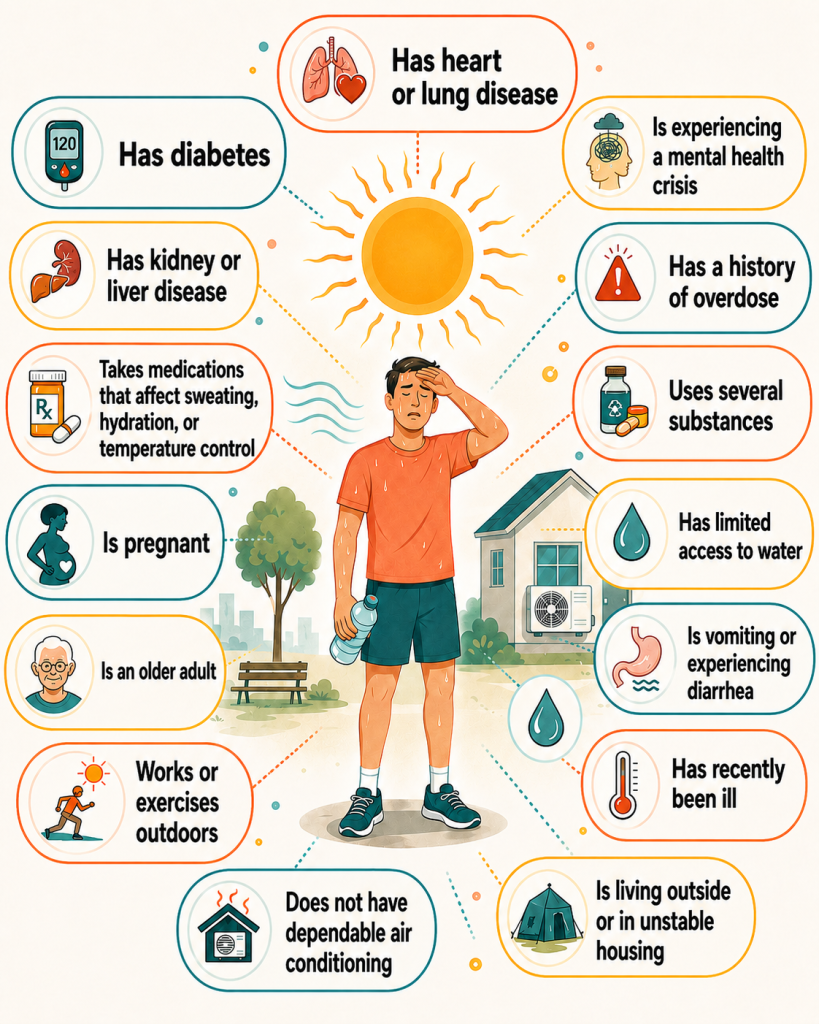
Heart disease, dehydration, mental illness, poor circulation, prescription medications, and alcohol use can all increase vulnerability during high heat.
Social isolation also matters. A person using alone may lose consciousness without anyone nearby to call for help. Someone living in a hot apartment may not realize how quickly the indoor temperature has become unsafe.
Check on friends or relatives who may be at risk, especially during a power outage or a period of several extremely hot days.
Which Signs Mean Someone Needs Emergency Help?
Heat exhaustion and intoxication may share symptoms, but certain changes should always be treated as emergencies.
Call 911 when the person:
- Cannot be awakened
- Has slow, stopped, or difficult breathing
- Is confused or cannot answer simple questions
- Has a seizure
- Loses consciousness
- Has severe chest pain
- Shows signs of a stroke
- Has an extremely high body temperature
- Is hallucinating or severely agitated
- Has hot skin with serious behavioral changes
- Is vomiting repeatedly
- Cannot walk safely
- May have taken an unknown drug
- Has blue, gray, or unusually pale lips or skin
Move the person to a cooler place when it can be done safely. Remove unnecessary outer clothing and use cool, wet cloths while waiting for emergency responders.
Do not give fluids to an unconscious, seizing, or severely confused person. CDC guidance recommends calling 911 immediately for suspected heat stroke, beginning cooling, and not giving the person anything to drink.
When opioids may be involved:
- Give naloxone if it is available.
- Call 911.
- Try to keep the person awake and breathing.
- Place them on their side to reduce choking risk.
- Stay until emergency help arrives.
Naloxone will not harm someone if opioids are not the cause of the emergency, but it will not treat stimulant toxicity or heat stroke. Emergency assessment is still necessary.
How Can Substance Use During Extreme Heat Become Less Dangerous?
The safest option is not to drink or use drugs, particularly during an extreme heat event. When someone is not ready or able to stop immediately, practical safety steps may reduce the chance of a fatal outcome.
Stay Near Reliable Cooling
Air-conditioned indoor space is safer than relying only on a fan during severe heat.
Consider:
- A trusted person’s home
- A public cooling center
- A library
- A community building
- An indoor public space
- A medical facility when symptoms are present
Do not stay inside a parked vehicle or an enclosed area that traps heat.
Avoid Using Alone
A person who becomes unconscious cannot give themselves naloxone, call 911, or move into the shade.
Stay around someone who can recognize overdose and heat illness. Make sure that person knows where naloxone is kept and how to use it.
Keep Naloxone Available
Naloxone should be available wherever opioids or unknown drugs may be used.
Counterfeit pills and stimulants may contain fentanyl, so naloxone is relevant beyond known heroin or opioid use. Give it promptly when breathing is slow or the person cannot be awakened, then call 911.
Do Not Mix Substances
Alcohol, opioids, and benzodiazepines can combine to suppress breathing. Multiple stimulants may increase cardiovascular and temperature-related strain.
Mixing a stimulant with a depressant does not cancel either substance. It can make the warning signs harder to recognize.
Drink Water Regularly
Water is generally the best hydration choice during heat. Alcohol does not replace it.
Someone with heart failure, kidney disease, diabetes, or a medically required fluid restriction should follow guidance from their healthcare provider rather than rapidly increasing fluid intake without advice.
Reduce Physical Exertion
Stimulants may make it feel possible to continue working, dancing, walking, or exercising. The body may still be reaching a dangerous temperature.
Take cooling breaks, move indoors, loosen unnecessary clothing, and stop activity when dizziness, weakness, nausea, or confusion begins.
Contact Treatment Before Another Crisis
Repeated heat exposure can turn an already dangerous pattern of alcohol or drug use into a series of emergencies.
A person does not need to wait for heat stroke, overdose, or hospitalization before contacting an addiction treatment center. An admissions assessment can help identify whether medical detox, residential treatment, Community IOP, or another service fits the current situation.
How Can Treatment Help With Seasonal and Environmental Triggers?
Hot weather can become tied to substance use in ways that are easy to overlook. Summer parties, outdoor events, travel, disrupted routines, poor sleep, chronic pain, and stressful work conditions can all increase exposure to alcohol or drugs. Treatment can help identify those connections and build safer responses.
| Area of Focus | How Treatment Can Help |
| Heat and outdoor activity | Recognize signs of heat-related risk and plan for safer work, exercise, or events. |
| Cravings and triggers | Develop strategies for responding to urges before they lead to substance use. |
| Daily routines | Improve sleep, hydration, rest, and other habits that support stability. |
| Mental health | Address anxiety, depression, trauma, stress, or emotional distress connected to use. |
| Pain management | Explore healthier ways to manage chronic pain without relying on alcohol or drugs. |
| Social situations | Build sober social options and prepare for parties, festivals, vacations, or other high-risk events. |
| Support and planning | Strengthen communication, create an emergency plan, and prepare for relapse risks. |
Treatment goes beyond simply avoiding alcohol or drugs. It helps a person develop healthier ways to respond to stress, discomfort, fatigue, celebration, pain, and other situations that may have been connected to substance use.
Midwest Recovery Centers Services
Midwest Recovery Centers provides comprehensive behavioral health care in the Kansas City area, with dedicated treatment for addiction, primary mental health concerns, and co-occurring conditions.
Our programs offer multiple levels of care in smaller, personalized settings designed to keep treatment responsive to each client’s needs. We take a whole-person approach that supports the mind, body, and spirit while emphasizing respect, inclusivity, equity, and service.
Detox and Residential Addiction Treatment
Our substance use track begins with Detox and Residential care during the first 30 days.
Detox provides supervised support as alcohol or drugs leave the body. Medication-assisted treatment is offered only during Detox when clinically appropriate.
Residential care follows with structured clinical programming that may include:
- Cognitive behavioral therapy
- Acceptance and commitment therapy
- Dialectical behavior therapy
- Rational emotive behavior therapy
- Individual and group therapy
- Experiential group work
- Holistic activities
- Support-group integration
- Medical and psychiatric assessments
- Personalized treatment planning
- Goal setting and progress reviews
We treat substance use involving alcohol, heroin and other opioids, methamphetamine, cocaine, marijuana, prescription drugs, and multiple substances.
Phase 1 and Phase 2 Extended Care
Clients may move from the initial 30 days into Phase 1 for approximately 60 days.
Phase 2 can continue for up to nine months based on clinical need. Housing is included in both phases.
The structure is similar to continuing inpatient support. Clients gradually gain more independence while remaining connected to stable housing, therapy, peers, accountability, and clinical care.
Extended care can give clients time to prepare for seasonal triggers, changes in routine, outdoor work, social events, and other real-life situations without losing treatment support too quickly.
Community IOP for Addiction and Mental Health
We offer two Community Intensive Outpatient Programs:
- Community IOP for Substance Use Disorder
- Community IOP for Mental Health
Community IOP is intended for clients who do not want, or are not able, to commit to the long-term housing component. It may serve as a starting point or provide continued treatment after a more intensive program.
Medical oversight is available in both Community IOP tracks and may include:
- Medication management
- Comprehensive psychiatric evaluations
- Transcranial Magnetic Stimulation
- Long-Acting Injectable medications
- PGx genetic testing
- Telemedicine
Both tracks provide structured support while clients continue living in the community and managing appropriate family, work, or school responsibilities.
Residential and Outpatient Mental Health Treatment
Our Residential Mental Health Program provides 45 days of structured care for primary mental health disorders. It is not limited to symptoms that occur alongside addiction.
Treatment may include therapy, psychiatric care, medication management, primary care support, TMS, precision medicine, nutrition, fitness, and whole-person activities.
Outpatient mental health services are also available. They may follow residential treatment, but residential care is not required first. Some clients begin directly with outpatient services when that level fits their symptoms and current stability.
Co-Occurring Disorder and Clinical Care
Alcohol and drug use may overlap with depression, anxiety, trauma symptoms, bipolar disorder, sleep problems, or another mental health diagnosis.
Our coordinated model allows substance use and mental health needs to be addressed through one personalized plan.
Clinical services include:
- Ongoing medical assessments
- Psychiatric evaluations
- Medication oversight
- Personalized treatment plans
- Measurable clinical goals
- Progress monitoring
PGx genetic testing is available across all levels of care. It may provide clinicians with added information about how a client processes certain medications, supporting more informed medication decisions alongside symptoms, health history, and prior responses.
Family Programming
Our Family Program provides education, counseling, encouragement, and practical tools for loved ones affected by addiction or mental illness.
Virtual Substance Use Disorder Family Programming meets Thursdays from 6:30 to 8:00 p.m. Central Time through a four-part monthly rotation:
- First Thursday: Addiction education, causes, family dynamics, and what to expect at MRC
- Second Thursday: Enabling, healthy support, grief, and codependency
- Third Thursday: Boundaries before, during, and after treatment
- Fourth Thursday: Detaching with love, self-care, and changing family roles
The Virtual Family Program for Mental Health meets on the third Thursday of each month at 8:00 p.m. Central Time.
Our in-person family education session, “Supporting Their Next Steps: An Aftercare Info Session for Families,” is held on the first Wednesday of each month at 7:00 p.m. at our Main Outpatient Campus, 13340 Holmes Road, Kansas City, Missouri 64145.
Aftercare
Our Aftercare program helps clients maintain stability as they move from structured treatment into everyday life, particularly during the first year.
Support may include:
- Regular counselor check-ins
- Individual or group therapy
- Relapse-prevention planning
- Community support
- Goal reviews
- Adjustments to the continuing-care plan
Aftercare can help clients prepare for heat waves, summer gatherings, schedule changes, outdoor work, and other conditions that may increase cravings or place physical health at risk.
Move Toward Care Before the Next Heat Emergency
Extreme heat can magnify risks that are already present with alcohol, stimulant, and opioid use. Dehydration, impaired judgment, cardiovascular strain, slowed breathing, unknown drug contents, and limited access to cooling can turn a familiar pattern into a life-threatening event.
A treatment decision does not have to begin after an ambulance ride.
Midwest Recovery Centers can help determine whether care should start with medical detox, residential addiction treatment, extended support with housing, Community IOP, or mental health services. Our admissions team can review current substance use, withdrawal risks, medical concerns, and recent emergencies while explaining the next steps clearly.
When the heat is rising and substance use is becoming harder to control, move toward a safer setting. Reach out to Midwest Recovery Centers today and begin a plan built for more than getting through the next hot day.
FAQs
1. Why does extreme heat make alcohol use more dangerous?
Alcohol can contribute to dehydration while reducing awareness of thirst, dizziness, fatigue, and rising body temperature. These effects can make heat exhaustion or heat stroke harder to recognize.
2. How do stimulants affect the body during hot weather?
Stimulants can increase heart rate, blood pressure, physical activity, and body temperature. Hot environments and prolonged activity can further increase the risk of overheating and cardiovascular complications.
3. Why are opioids especially risky during extreme heat?
Opioids can slow breathing and cause heavy sedation. Someone who becomes unconscious in a hot environment may be unable to move to a cooler location or recognize signs of heat illness.
4. Does mixing substances make heat-related risks worse?
Yes. Mixing alcohol, opioids, stimulants, benzodiazepines, or unknown drugs can make breathing, cardiovascular, and temperature-related effects harder to predict and recognize.
5. When should someone call 911 for heat and substance-related symptoms?
Call 911 if someone cannot be awakened, has trouble breathing, experiences a seizure, becomes severely confused, loses consciousness, has severe chest pain, or shows signs of heat stroke