


Key Takeaways:
- Travel can disrupt sleep, meals, support meetings, and familiar routines, making thoughtful timing especially important during early recovery or after inpatient treatment.
- A vacation relapse-prevention plan should identify triggers, maintain support check-ins, protect medications and healthy routines, and outline specific responses to cravings.
- Clear boundaries, supportive travel companions, structured downtime, and recovery-friendly activities can make vacations safer without removing rest, enjoyment, or flexibility.
A vacation can sound like exactly what someone needs after a stressful season. Time away feels refreshing. A new setting can feel freeing. After treatment, though, travel can also bring a different kind of pressure. Travel can disrupt familiar routines and bring unexpected triggers, especially when alcohol is common in airports, restaurants, resorts, weddings, cruises, and group trips. Even a short weekend away can weaken the structure that has been helping someone stay steady.
Travel can still be part of life after treatment when the timing and plans align with the person’s current stage of recovery. A vacation planned too early or too casually can create stress where a person expects relief. On the other hand, a thoughtful plan can make travel feel manageable, enjoyable, and far less risky.
Recovery should support a fuller life while helping progress remain steady. Preparation makes that possible. A well-planned trip includes flights, hotels, and reservations, along with support, timing, boundaries, and strategies that help a person stay grounded when routines change.
At Midwest Recovery Centers in Kansas City, MO, clients work on more than just getting through detox or finishing a program. They build practical recovery skills for real life, including transitions back into work, family life, social events, and time away from home. When travel is planned with care, it can fit into recovery instead of working against it.
“I’ve seen people do incredibly well in recovery and then get caught off guard by a vacation because it disrupted the routines and support systems that had been keeping them grounded. Travel often brings unstructured time, social pressure, and unexpected triggers, which is why sobriety shouldn’t be left to chance. Planning ahead—whether that’s identifying meetings, talking with supportive people, or preparing for high-risk situations—can turn a vacation into an opportunity to strengthen recovery rather than put it at risk.”
– Taylor Brown, CRADC
Why Vacations Can Feel Harder in Early Recovery
Travel changes more than location. It changes rhythm, and that alone can affect recovery more than people expect.
A person may be doing well at home because daily life has structure. Meals happen around the same time, sleep is more consistent, therapy, support groups, medication routines, and check-ins are built into the week. Then a vacation interrupts all of that at once. Even if the trip is supposed to be relaxing, the body and mind still have to adjust.
That can create pressure in several ways:
- Sleep gets disrupted
- Daily routines disappear
- Meals become irregular
- Support meetings get skipped
- Cravings show up during downtime
- Old travel habits come back quickly
- Social pressure increases around drinking or drug use
- Stress rises from delays, family conflict, or packed schedules
Early recovery can make those shifts feel even stronger. A person may still be building emotional regulation, impulse control, and confidence in social situations. The brain may still be adjusting after substance use. Something as simple as exhaustion, overstimulation, or being surrounded by alcohol can lower a person’s ability to respond well in the moment.
That is one reason a vacation after inpatient rehab should be planned with more care than it might have been in the past. Recovery needs honesty and thoughtful planning. When a trip creates more risk than support, waiting may be the safer choice. When the plans can be shaped around recovery needs, travel becomes much more realistic.
Vacation After Inpatient Rehab Should Be Timed With Care
The first question is not where to go. The first question is whether the trip fits the person’s current level of stability.
A vacation after inpatient rehab can work well for some people, especially when they have completed treatment, stayed engaged in aftercare, and built a routine that feels solid. For others, travel too soon can remove the very structure that is keeping them safe. Timing matters because the weeks after inpatient care are often a vulnerable period. Cravings can still surface. Emotional swings may still happen. Confidence may rise faster than actual stability.
A few signs that travel timing may need a closer look include:
- Recent cravings that still feel intense
- Skipping support meetings or therapy
- Trouble sleeping or managing stress
- Ongoing conflict at home
- Strong fear about being around alcohol or drugs
- Pressure from others to “just relax” and act like recovery is already easy
- A pattern of saying yes to events before thinking them through
A few signs that a trip may be more realistic include:
- A steady daily routine
- Ongoing therapy, aftercare, or support group involvement
- Clear coping skills that are already working
- Good insight into personal triggers
- Willingness to set boundaries before the trip
- A plan for staying connected to support while away
There is no perfect timeline that fits everyone. Some people need more time before taking any kind of trip. Others can travel sooner if the plan is simple and recovery-friendly. The decision should depend on whether the person’s current recovery can support the vacation safely.
How to Build a Relapse Prevention Plan Before You Leave
A relapse prevention plan should be part of vacation planning, not an afterthought. It gives the trip structure and helps the person respond early if stress, cravings, or emotional pressure start building.
The best relapse prevention plan is specific. General ideas like “I’ll be careful” or “I won’t do anything stupid” are not enough. Recovery is stronger when the person already knows what situations could be risky and what steps they will take if those situations happen.
A useful plan should cover several areas.
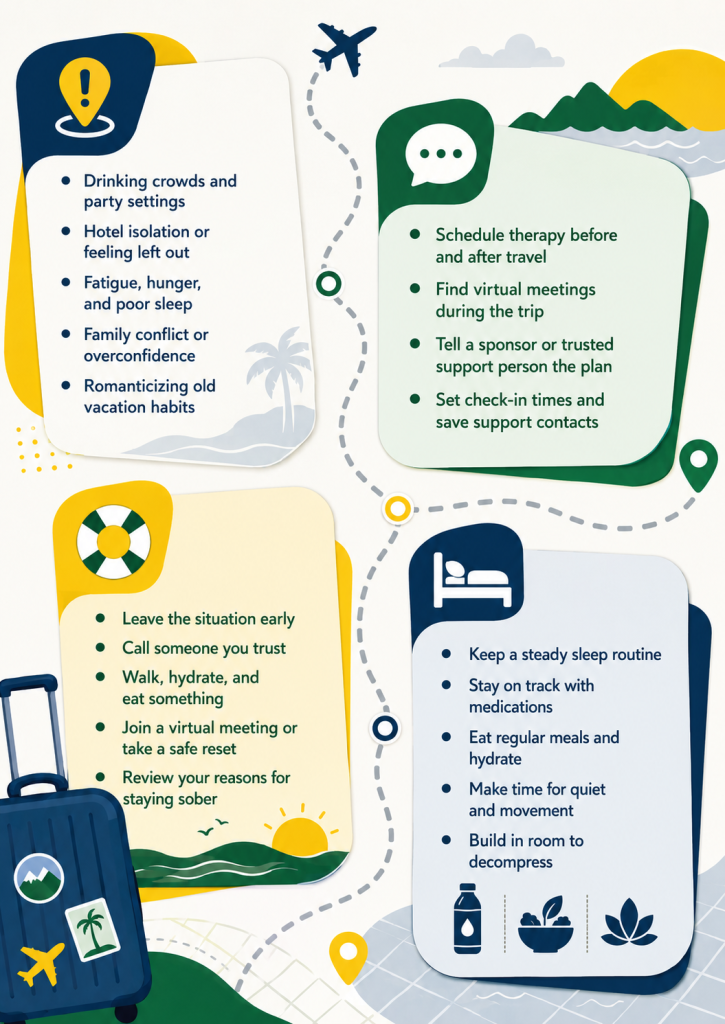
How to Plan Vacations Without Risking Your Recovery.png
These simple habits help keep the nervous system steady and reduce risk.
Choosing a Recovery-Friendly Vacation
The destination matters less than the environment it creates. A recovery-friendly trip is simply set up in a way that does not constantly test sobriety.
Some trips are built around drinking culture from start to finish. Others leave room for peace, routine, and actual rest. That difference can shape the entire experience.
When choosing the trip, it helps to think through a few practical questions.
Who is going on the trip
Travel companions have a huge impact on how safe a trip feels. A person’s recovery can be put under pressure quickly if the group expects late nights, heavy drinking, or constant social activity.
Healthier travel companions usually:
- Respect recovery boundaries
- Do not pressure anyone to drink or use
- Can adjust plans if something feels off
- Support rest and downtime
- Care more about the person than the party atmosphere
The wrong group can make even a beautiful destination feel risky. The right group can make a simple trip feel supportive.
What is the main purpose of the trip
Some vacations are built around rest. Some are built around celebration. Some are packed with nightlife, impulsive plans, and social pressure. The purpose matters because it shapes the risk level.
A person in early recovery may do better with:
- A quiet beach stay
- A nature trip
- A wellness-focused getaway
- A short family visit with clear boundaries
- A low-key road trip with structure
They may do worse with:
- Bachelor or bachelorette trips
- Party resorts
- All-inclusive alcohol-heavy environments
- Trips with old using friends
- Crowded festival or club-centered weekends
That does not mean recovery requires a dull life. It means the environment should match the stage of stability.
How much downtime is planned
Too much unstructured time can become a problem fast. A trip should have enough intention that boredom does not turn into impulsivity.
Planning morning routines, regular meals, mood-supportive activities, quiet breaks, evening structure, and a consistent bedtime can help the trip feel more manageable. This balance leaves room for enjoyment while protecting recovery.
Travel Triggers That Can Quietly Raise Relapse Risk
Some triggers are obvious. Others are easy to dismiss until they pile up.
One of the most overlooked parts of sober travel is how many small pressures can build over the course of a day. A missed flight, poor sleep, an argument, being hungry, and then walking into a resort bar can create a very different emotional state than the person expected that morning.
Travel triggers often include more than substances themselves.
| Trigger Type | Common Examples | Effect on Recovery |
| Emotional | LonelinessAnxietyShameIrritabilityFamily tensionGrief | Raises stressIncreases cravingsClouds judgment |
| Environmental | Airport barsHotel minibarsCasinosWeddingsNightlifeAlcohol-focused restaurants | Brings back old habitsIncreases temptationMakes leaving harder |
| Physical | ExhaustionDehydrationSkipped mealsIllnessJet lagBusy schedules | Lowers patienceWeakens focusIncreases relapse risk |
Boundaries Make Vacations Safer and More Enjoyable
A trip becomes easier when boundaries are decided before departure instead of in the middle of the pressure.
Boundaries protect recovery because they remove last-minute decision-making in high-risk moments. That can be especially helpful for people who are still rebuilding confidence.
Helpful vacation boundaries may include:
- Not going to bars, clubs, or casinos
- Asking travel companions not to offer alcohol
- Staying in a hotel without a minibar if possible
- Choosing your own room for privacy and sleep
- Leaving events early
- Keeping mornings calm and structured
- Saying no to spontaneous nightlife plans
- Driving yourself when possible so you can leave if needed
Boundaries around people matter too. Some people still connect certain friendships with drinking, drug use, or emotional chaos. A vacation is not the time to test whether those relationships suddenly feel healthy.
It is also worth setting internal boundaries. A person may decide ahead of time:
- I will not skip support check-ins
- I will not stop taking medications
- I will not keep a craving secret
- I will not stay where I feel unsafe
- I will not sacrifice sleep just to keep up with everyone else
Those decisions reduce confusion later. Recovery often holds stronger when boundaries are simple and direct.
What to Do If a Trip Starts to Feel Risky
Even a well-planned trip can veer off course while the vacation remains salvageable. Responding early can prevent pressure from building and help the person regain stability.
There are usually signs before a full relapse. A person may start feeling restless, detached, resentful, overly confident, or mentally preoccupied with drinking or drug use. They may stop checking in, isolate in their room, skip meals, or start telling themselves that one exception would not matter.
Those moments should be taken seriously.
Step back and lower the pressure
The first move is often to reduce stimulation. That may mean leaving the restaurant, stepping away from the group, canceling one activity, or taking a quiet break. A trip does not have to go exactly as planned to still be worth it.
Reach out immediately
This is where support matters. Call a sponsor, therapist, sober friend, family member, or support line. Do not wait to “see if it passes” without telling anyone. Silence gives cravings more room to grow.
Return to the relapse prevention plan
Go back to the basics:
- Eat
- Hydrate
- Rest
- Breathe
- Move your body
- Join a meeting
- Review your reasons for staying sober
- Reconnect with someone safe
A relapse prevention plan is not just for the worst-case scenario. It is there for the early warning signs.
Change the trip if needed
There are times when the right move is to shorten the trip, switch rooms, stay with a different person, skip an event, or go home early. A vacation is never more important than recovery.
Midwest Recovery Centers’ services
Midwest Recovery Centers provides care that is designed for real life, not just the first days of crisis. That matters when someone is planning for work, family events, holidays, and travel after treatment. Recovery gets stronger when the support system includes both clinical care and practical planning.
Substance use disorder treatment
The substance use track at Midwest Recovery Centers begins with Medical Detox and Residential, which covers the first 30 days before Phase 1. Detox is medically supervised, followed by residential care that includes evidence-based therapies such as CBT, ACT, and DBT, along with holistic activities and experiential group therapy. Medication-assisted treatment is offered during Detox only when needed.
After that, clients can continue into Transitional Recovery and Extended Care. This track includes:
- Medical Detox and Residential for the first 30 days
- Phase 1 for about 60 days
- Phase 2 for up to 9 months, depending on need
Housing is part of both Phase 1 and Phase 2, which gives clients continued structure and support while they keep building stability. For many people, that extra time matters. It can help them practice recovery skills before jumping back into a less structured environment.
Community IOP for addiction and mental health
Midwest Recovery Centers offers two Community IOP options:
These programs are especially helpful for people who do not want to, or are not able to, commit to the long-term housing part of treatment. They provide structure while allowing clients to stay in the community.
Both Community IOP programs include medical oversight, which can involve:
- Medication management
- Psychiatric evaluations
- TMS or Transcranial Magnetic Stimulation
- LAI or Long Acting Injectables
- Genetic testing
- Telemedicine
That combination gives clients more than weekly counseling. It gives them access to ongoing psychiatric and medical support while they continue working on recovery.
Mental health treatment
Midwest Recovery Centers also provides care for primary mental health needs. The Residential Mental Health Program is a 45-day program designed for people dealing with primary mental health disorders, not only mental health symptoms that occur alongside addiction.
The center also offers outpatient mental health services, which can be used on their own or as part of a larger plan depending on the client’s needs.
Co-occurring disorders support
For clients dealing with both addiction and a mental health diagnosis, Midwest Recovery Centers uses a shared treatment model. That approach helps the clinical team treat the whole person rather than splitting addiction and mental health into separate problems.
Family program
Recovery affects more than one person, so family support is part of the care model too.
Virtual Substance Use Disorder Family Programming
Thursdays from 6:30 to 8:00 PM CST in a four-part monthly rotation
- 1st Thursday
What Am I Dealing With - 2nd Thursday
Why Can’t I Fix My Loved One - 3rd Thursday
How Do I Stop Participating in the Addiction Cycle - 4th Thursday
What Does Family Recovery Look Like
Virtual Family Program for Mental Health
3rd Thursday of the month at 8:00 PM CST
In-Person Family Education
Supporting Their Next Steps An Aftercare Info Session for Families
1st Wednesday of the month at 7:00 PM
Main Outpatient Campus
13340 Holmes Rd, Kansas City, MO 64145
Aftercare
Aftercare supports long-term sobriety after structured treatment. Midwest Recovery Centers’ Aftercare program includes personalized planning, regular counselor check-ins, individual and group therapy, relapse prevention work, and ongoing support during the transition back into daily life.
That continued support can be especially helpful when someone starts thinking about bigger life events again, including vacations, social travel, family visits, and holidays.
Recovery Can Include Travel When the Plan Is Solid
Vacations can remain part of life when they are approached with greater honesty, planning, and structure than in the past. The right trip at the right time can be restful, meaningful, and fully possible in recovery. The wrong trip, taken too casually or too soon, can create pressure that was easy to underestimate.
A strong plan changes that. When a person thinks through timing, support, triggers, boundaries, and daily structure, travel becomes less about testing recovery and more about protecting it. That is especially important after higher levels of care, when new routines are still taking hold and confidence needs to be backed up by real preparation.
Midwest Recovery Centers provides medical detox and residential care, Phase 1 and Phase 2 extended care with housing, Community IOP for substance use and mental health, clinical services with medical oversight, PGX genetic testing, residential mental health treatment, outpatient mental health services, co-occurring disorders support, family programming, and aftercare in the Kansas City area. That full continuum helps clients build recovery skills that carry into everyday life, including time away from home.
Stay Connected Before Your Next Trip
If you are thinking about taking a vacation after inpatient rehab, or trying to figure out how travel fits into early recovery, Midwest Recovery Centers can help you think through the next step. Contact our team today to talk about treatment, aftercare, relapse prevention planning, or the level of support that makes the most sense for where you are right now.
FAQs
Is it safe to take a vacation after inpatient rehab?
Travel may be appropriate when routines are stable, coping skills are working, and ongoing treatment or aftercare remains active. Recent cravings, poor sleep, or limited support may signal that more time is needed.
What should a vacation relapse-prevention plan include?
The plan should identify personal triggers, support contacts, virtual meetings, medication and sleep routines, craving-management strategies, and clear steps for leaving a risky environment.
What makes a vacation recovery-friendly?
A recovery-friendly vacation includes supportive companions, predictable routines, limited exposure to alcohol or drugs, balanced activities, healthy downtime, and the freedom to change plans when needed.
How can someone manage cravings while traveling?
They can leave the triggering environment, contact a support person, eat, hydrate, rest, attend a virtual meeting, take a walk, and review their written reasons for staying sober.
What should someone do if a vacation starts feeling unsafe?
They should respond early by reducing stimulation, contacting support, returning to their relapse-prevention plan, changing accommodations or activities, or ending the trip early when necessary.